Temple Run 2 Still Makes Every Second Count

Temple Run 2: Endless Escape
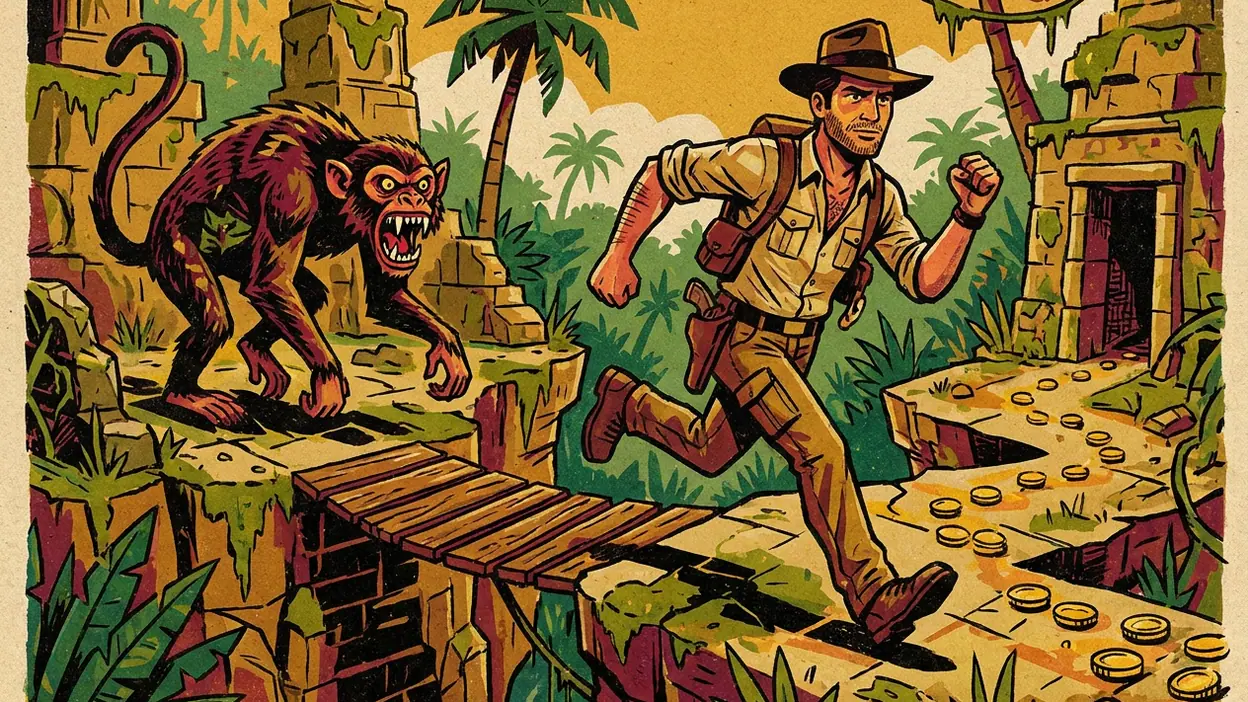
Some games ask for your evening. Temple Run 2: Endless Escape asks for one more minute, then makes that minute feel deliciously precarious. A stone path narrows over a ravine; a root buckles the ground; a turn arrives just as the pursuing demon monkey fills the edge of the screen. The appeal is not complexity but timing. Temple Run 2 remains one of mobile gaming’s cleanest expressions of momentum, and its best trick is making a familiar formula feel alive beneath your thumbs.
That is why it deserves an editor’s spotlight. Endless runners have been copied, remixed, and crowded with currencies and menus, but this one still understands the pleasure of a chase. It gives you a clear objective, puts danger directly in your path, and lets the run tell its own story. You are not planning a build or studying a map. You are reading the next few seconds, making a decision, and living with it.

Temple Run 2: Endless Escape
Imangi Studios · 4.1 · Free · Android, iOS


Why the chase still matters
The premise is wonderfully economical: explorer Guy Dangerous has stolen an idol, and a hulking demon monkey is after him. The game wastes no time explaining the stakes. Your character bolts forward automatically while the world rushes toward you in three lanes. Swipe left or right to turn, up to jump, down to slide, and tilt to steer toward coins. The controls are simple enough to learn in a run and demanding enough to punish a distracted thumb.
That simplicity is not a lack of design; it is the design. Every obstacle asks for a small, legible response. A broken bridge calls for a jump. A low arch demands a slide. A branching trail asks you to choose quickly, while a line of coins tempts you to drift toward danger. The game turns instinct into a resource. When the run goes well, it feels less like button pressing than a short stretch of athletic concentration.
The visual language helps. Temple walls, dense greenery, wooden bridges, and exposed drops make the route easy to read without making it feel sterile. The camera stays close enough to sell the speed, yet the track ahead remains visible enough for a fair reaction. A turn can still catch you out, but the best failures feel like your mistake, not the game hiding the answer.
What feels exceptional in motion
Temple Run 2 has a physical rhythm that many runners lose. A jump is a sharp beat; a slide is a low, quick answer; a turn breaks the straight-line flow and resets your attention. The obstacle patterns become a kind of visual percussion. You learn to anticipate the shape of a sequence, but the pace keeps you from treating it as a solved routine. It is easy to understand why a run lasting less than a minute can feel like a complete little drama.
Then there is the chase itself. The demon monkey is not a deep character, nor does it need to be. Its presence gives each stumble a consequence and makes the opening seconds feel urgent. Once you have built up speed and distance, the threat becomes more psychological: the pursuer is a reminder that a careless move can end the run at any moment. The game makes failure immediate, but usually not bitter. You can restart almost at once, already sure you can do better.
Coins are the most obvious incentive, but they also change how you move. A safe line keeps you alive; a coin trail may ask you to lean toward a bend or take a jump with less room for error. That tension gives the tilt controls a purpose beyond steering for its own sake. The best coin grabs are not passive pickups. They are tiny bargains with risk.
How it keeps earning another run
Long-term attention comes from the combination of distance, objectives, and gradual improvement. Each run ends with a clean score to beat, while missions give you smaller targets that can reshape how you play. You might focus on collecting, surviving, or completing a particular kind of maneuver. These goals keep a session from becoming an undirected attempt to run farther, without turning the game into a checklist-heavy campaign.
Upgrades add a useful sense of progress. Coins can improve power-ups, making familiar tools more valuable over time, and collectible resources give you reasons to pay attention beyond the immediate path. Shields, boosts, and other assists can rescue a run or help you chase a better distance. They do not erase the core challenge; they give it a few extra angles. A well-timed boost feels like a reward for reaching a rhythm, not a substitute for learning one.
Character selection and changing environments provide welcome variety, though the game’s real identity remains consistent: a runner, a track, and a sequence of decisions made at speed. New scenery matters because it refreshes the eye, while the familiar controls preserve the muscle memory that makes returning so easy. The loop is sturdy enough to survive brief sessions and satisfying enough to support longer attempts when a score starts to look beatable.
Best moments in real play
The most memorable runs are not always the longest. They are the ones where the route seems to tighten around you: a coin line pulls you toward the edge, a jump lands just before a low obstacle, and a sharp turn arrives while your attention is still on the last recovery. When you make it through, the relief is immediate. You have not merely watched a character survive; your hands have carried the timing.
There is a satisfying little escalation in returning after a careless crash. On the next attempt, you recognize the obstacle that caught you, hold your swipe a fraction longer, and keep the run alive. That feedback is unusually direct. Temple Run 2 does not need a tutorial to explain the lesson because the track demonstrates it, and the restart lets you test your correction almost instantly.
It also suits the awkward gaps in a day. A run can fit between tasks, but the game does not feel disposable. The concentration is real, the feedback is immediate, and the score provides a reason to return later. Unlike a news feed or a keyboard utility, this is not a tool for making a phone more productive. Its value is the clean, self-contained intensity of play.
A quieter edge over louder rivals
Many mobile games compete through a constant parade of rewards, events, and prompts. Temple Run 2’s appeal is less noisy. Its strongest hook is visible on the track, and its loop makes sense before any menu has a chance to explain itself. There is progression, but the game does not need an elaborate fictional universe to justify every session. The chase is enough.
That restraint is also why it still feels approachable. You can hand it to someone unfamiliar with mobile games and explain the controls in a sentence. Yet there is room to improve through better path reading, more disciplined coin collection, and careful use of power-ups. It has a broad entrance and a meaningful skill ceiling, a balance that is harder to achieve than its stripped-down presentation suggests.
Compared with louder rivals, its advantage is not that it has more to do. It is that its central action remains legible and satisfying. The game rarely asks you to stop the chase in order to manage the chase. For a mobile title, that is a valuable kind of focus.
Where the polish runs short
Age shows most clearly in repetition. The core track patterns can begin to feel familiar after many sessions, and changes in scenery do not always alter the underlying rhythm enough to surprise experienced players. The game is excellent at making a known sequence feel urgent, but urgency is not the same as novelty. If you want a constantly unfolding campaign or a deep narrative, this is not the runner to provide it.
The coin economy and upgrades can also make progress feel uneven. Early improvements are easy to appreciate, but collecting enough resources for later goals asks for repetition, and some objectives can feel more like chores than discoveries. Power-ups add a welcome layer, yet they can blur the purity of a run when you would rather focus on mastering the route. These systems are useful support, not the reason to play.
There is a practical caveat, too: the experience depends on responsive touch controls. A swipe that fails to register can end a run in a way that feels harsher than a bad decision, especially on a small screen or during a hectic sequence. The game is at its best when your device translates a gesture immediately, and at its least forgiving when that connection falters.
Who should care most
Temple Run 2 is an easy recommendation for anyone who wants an action game that starts quickly and rewards attention without demanding a long commitment. It suits commuters, casual players, and competitive score-chasers alike, provided they enjoy repeating a challenge to shave off mistakes. It is also a strong choice for players who prefer a clear action loop to a sprawling progression system.
It is less suited to someone who needs every session to reveal new mechanics or advance a story. Its pleasures are deliberate and repeated: learn a pattern, react faster, last longer, and perhaps gather enough coins to strengthen your next attempt. If that sounds narrow, it is. The achievement is that the narrowness feels focused rather than limiting.
Why it belongs in this moment
Mobile games often have to fight for attention against everything else a phone can do. Temple Run 2 answers with a rare form of immediacy. There is no long setup before the fun arrives, and no complicated system between you and the next attempt. The game understands that a short session can still demand skill and leave a lasting impression.
Its influence is easy to take for granted because the endless-runner template became so familiar. But familiarity should not obscure the craft here: the clear lanes, readable hazards, crisp gestures, and steady escalation all work together. The game does not need to be the newest runner to remain a persuasive one. It needs only to make the next turn feel close enough to risk.
Temple Run 2: Endless Escape earns its place not by reinventing the chase but by keeping its essentials sharp. The loop is immediate, the rhythm is tactile, and the restart makes improvement feel possible. Its repetition and dated progression keep it from being flawless, but those limits do not undo its central pleasure. If you want a mobile action game that turns a few swipes into a genuine test of nerve, this remains an excellent run worth taking.