Roblox vs. Mobile Games That Do One Thing Better

Roblox
On a phone, most games ask you to learn one world and get better at it. Roblox asks you to pick a world from a moving crowd, play for a while, then jump to another. That difference makes it less polished than a focused adventure or shooter, but far harder to exhaust. If you want one dependable game with a clear loop, choose a rival. If you want a social playground that can keep changing shape, Roblox is the stronger buy, even though its quality is uneven.
A platform competing with games, not just games like itself
Putting Roblox beside Pokémon GO, Super Bear Adventure, FPS Strike Ops: Modern Arena and School Party Craft sounds like a straightforward comparison, but it is not quite fair. Those games deliver authored experiences: a specific kind of exploration, platforming, combat or open-ended play. Roblox is a platform where players make and publish experiences, so the closest comparison is a whole arcade whose machines vary wildly in quality.


That distinction matters before you download anything. Roblox does not have one campaign, one art style or one central rhythm. Its home screen is a catalogue of experiences, from obstacle courses and role-playing servers to driving games, social hangouts and competitive rounds. You are not merely choosing a character; you are choosing the rules for the next session. The freedom is its defining appeal and the reason a direct verdict needs a caveat.
Where the breadth pays off straight away
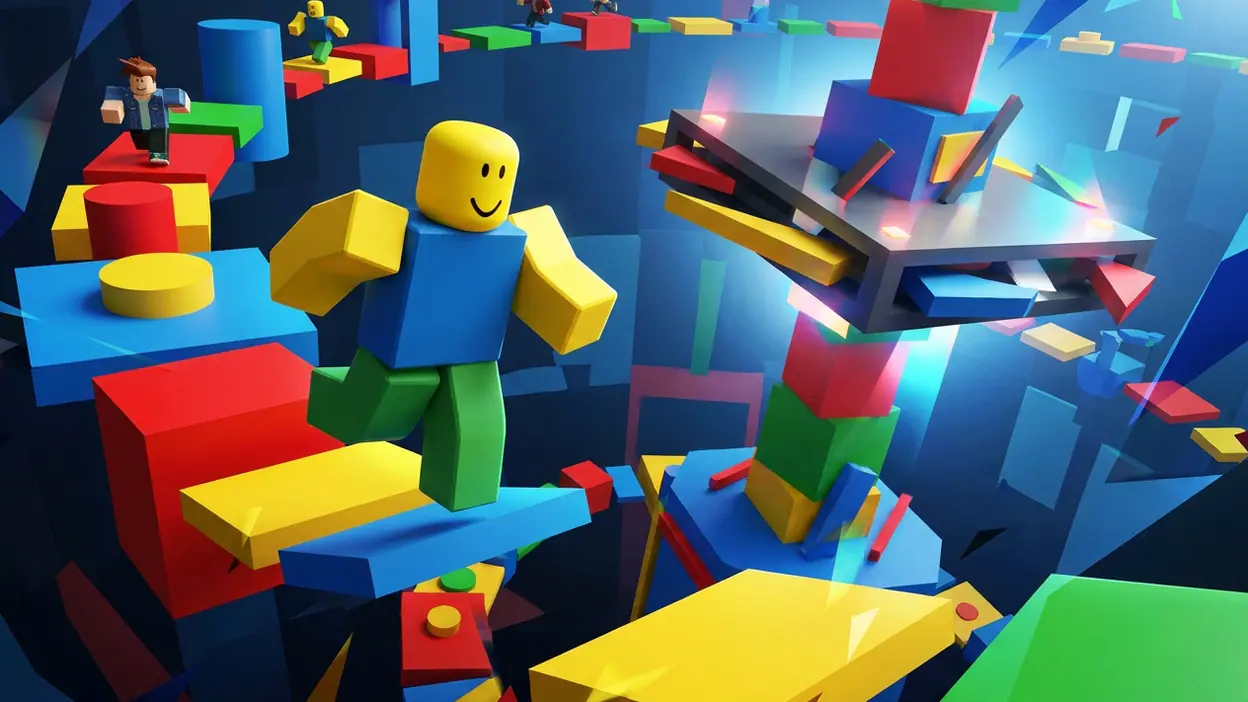
The immediate win is variety without a new download for every mood. A short session can mean trying to clear an obstacle course, joining a busy role-play world, or seeing what friends are playing. The block-built avatars and environments give the platform a recognizable look, but the experiences can change their scale, mechanics and atmosphere. One afternoon can feel like a playground crawl; the next, like a round-based contest.
That makes Roblox unusually good at recovering from boredom. A conventional game can lose its grip when its main loop starts to repeat. Here, the escape route is built in: leave an experience and browse for another. Not every switch leads to a good discovery, but the possibility keeps the act of browsing part of the entertainment. The hook is less “master this one game” than “what happens if I try this one?”
It also turns friends into a practical guide. When someone recommends an experience or invites you into their server, the platform has a ready answer to the usual “what should we play?” problem. That social pull can keep a group together longer than a single-player adventure with a more carefully paced campaign. Its replay value comes from both new content and the unpredictable mix of people sharing it.
Where focused rivals still do their job better
Pokémon GO is the better choice when the point is to get outside and explore places around you. Its map-based routine gives walking a clear purpose, and its central collection loop is much easier to explain than Roblox’s sprawling menu of player-made worlds. If you want a game that makes a neighborhood feel like part of the play space, Roblox cannot replace that real-world connection.
Super Bear Adventure makes the opposite case: less choice, more authorial control. Its platforming has a clear identity and a more consistent sense of place. You know you are moving through one designed adventure, not sampling a huge catalogue whose entries may be delightful, repetitive or awkward. Players who want a readable objective and a steady progression path will likely find it more satisfying.
FPS Strike Ops: Modern Arena is the cleaner pick for people who want to get into direct action with minimal browsing. Its pitch is focused, and that focus matters on mobile, where a few taps between opening a game and reaching the fun can make a difference. School Party Craft, meanwhile, is a more direct fit for players specifically after a casual school-themed sandbox. Roblox can contain experiences with similar appeal, but it makes you find them first.
The daily-use difference: choice versus certainty
Roblox’s daily rhythm depends on discovery. You browse, join, learn a small set of rules, and decide whether the experience deserves another round. That can feel lively because there is always another door to open. It can also feel like work when recommendations miss, a server is quiet, or the experience you clicked does not match its promise. A tightly designed rival removes much of that decision-making: open it and you already know what kind of session you are getting.
There is a social cost to that openness, too. Experiences are made by many creators, so tone, moderation and quality are not uniform across the platform. Parents and younger players should pay attention to privacy, chat and account settings, and adults should not assume that a familiar-looking game is automatically a well-managed one. Roblox’s range is a strength only when players can navigate it with care.
Its best sessions have a pleasingly loose rhythm: enter with a friend, stumble into a challenge, fail in a funny way, then move on before the joke wears out. A polished campaign might give that sequence a stronger narrative, but Roblox supplies the people and the easy exits. The memorable moments are often less about reaching an ending than about what happened along the way.
Speed, usability and the cost of getting started
On mobile, the basic appeal is straightforward: install one app, sign in, and browse a huge supply of experiences. The trade-off is that a catalogue-based platform adds friction where a focused game can start instantly. You have to choose, wait for an experience to load, orient yourself in its particular controls, and sometimes try again if it is not for you. Roblox may be quick to launch as an app, but it is not always quick to deliver a satisfying game.
Control quality varies for the same reason. Some experiences feel built for touch; others can be cramped or fiddly on a small screen. Players accustomed to a single game’s consistent interface may find the shifts disorienting. On the other hand, once you find a few favorites, you can return to them directly, and playing with friends can make the first minutes in an unfamiliar world much easier.
Performance and feel can also change from one experience to another, so there is no honest platform-wide promise of smoothness or polish. That variability is the price of a library shaped by many creators rather than one studio’s single vision. It is worth trying a few experiences before deciding the whole app is for you.
Who should choose what
Choose Roblox if you enjoy sampling ideas, playing socially and accepting that some sessions will be better than others. It suits curious players who like to browse, younger groups looking for shared activities, and anyone who wants a broad library inside one app. It is also the strongest option in this comparison for sheer range: none of the rivals can match its variety of creator-made experiences.
Choose Pokémon GO if walking, collecting and location-based play are the main attraction. Choose Super Bear Adventure if you want a cohesive platforming adventure with a clearer authored path. Go for FPS Strike Ops: Modern Arena if your priority is focused mobile combat, and School Party Craft if you want that specific casual sandbox mood without searching a wider platform for it. These are not lesser choices; they are more predictable ones.
The surprise is that Roblox can be both the biggest and the least dependable
Its scale creates an odd reversal. More experiences should mean a better chance of finding a perfect fit, and often they do. But the same abundance makes the overall experience harder to judge by its best moments alone. A standout world can make Roblox feel limitless; a dull or poorly tuned one can make the platform feel like a crowded shelf with no useful labels. The quality of the next session depends on what you pick, not just on the app itself.
That is also its surprising advantage over a game with a single, carefully maintained loop: it can change with your taste. A player who has outgrown one kind of experience can move to another without abandoning the social space or starting from scratch with a different app. The platform is not automatically fresh, but its variety gives it more ways to become fresh again.
Best value comes down to what you want from one install
For variety per download, Roblox is the clear winner. It gives you a far wider menu of play than any one of these rivals, and its strongest experiences can hold their own as reasons to return. But value is not just a count of available worlds. It is also how quickly you reach something enjoyable, how reliably it works, and whether you like the people and rules in that particular space.
If browsing and social play are part of the fun, the platform’s unevenness is a tolerable cost for its range. If you would rather press play and get a consistent adventure, shooter or outdoor loop, a dedicated game is better value for your attention. The most useful way to judge Roblox is to try several well-reviewed experiences, not to expect every click to deliver the same standard.
My recommendation is simple: install Roblox if you want a changing social playground and have the patience to curate your own favorites. Skip it as your main pick if you value immediate access, a coherent campaign or consistent touch controls above variety. Against this group, Roblox wins on breadth and replay potential, not polish. That is a real advantage, but only for players who enjoy choosing what the game becomes next.