Lumber Inc Shows Why Idle Games Need More Than Automation

Lumber Inc
A sawmill is an unusually honest setting for an idle game. Trees arrive, machines turn them into boards, and cash funds a bigger operation; every upgrade promises to make the next round faster. Lumber Inc understands that clean, visible chain of cause and effect, then exposes the genre’s current dilemma: players still enjoy watching numbers climb, but passive growth by itself is becoming a thin reason to stay. The strongest idle simulations now make automation feel like a system to shape, not merely a timer to revisit.
That distinction matters because the genre’s basic pleasure has not disappeared. There is a particular comfort in opening a game to find that a production line kept working while you were away. The question is what happens after the initial satisfaction. Does the factory ask for judgment, offer a meaningful new rhythm, or simply put another upgrade behind another wait? Lumber Inc is a useful test case because its sawmill makes the loop easy to read and its limits equally easy to see.

Lumber Inc
Clingycat Games · 4.4 · Free · Android


The baseline has moved beyond bigger numbers
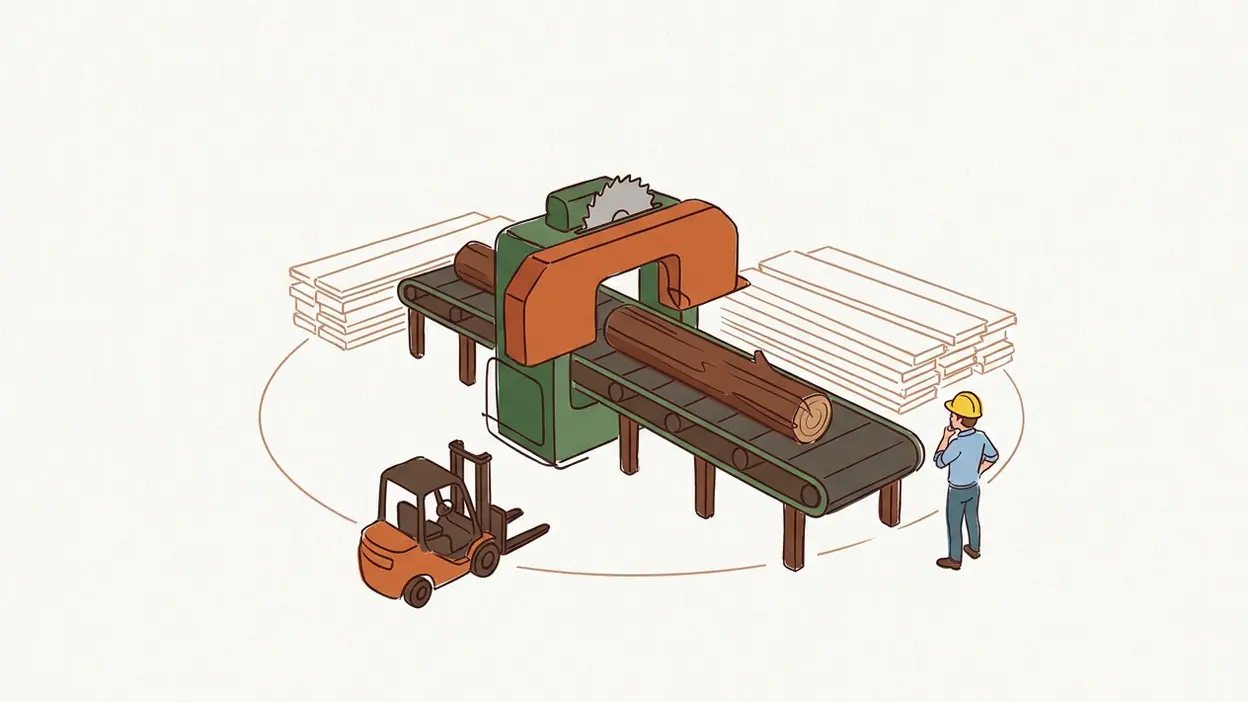
In Lumber Inc, the central loop is straightforward: harvest timber, process it through the sawmill, sell the output, and reinvest in production. The appeal is partly visual and partly managerial. Logs move through a sequence of machines, the operation expands, and bottlenecks become prompts to improve a station or hire help. Rather than presenting growth as an abstract number alone, the game gives it a factory floor. That small difference helps each upgrade register as a change in the business.
This is now table stakes for idle simulation. Players expect an opening that teaches itself, progress they can understand at a glance, and some reason to return after leaving the game. They also expect decisions to arrive at a useful pace. A first session should produce enough visible improvement to feel rewarding, while later sessions need more than a longer list of prices. The best examples balance short visits, where a few taps make a difference, with longer goals that give those visits direction.
The category has also trained players to notice friction. Waiting can be part of the appeal if the game gives that pause a purpose; waiting becomes dead air when nothing changes except a countdown. Likewise, upgrades need not transform a whole strategy, but they should change the feel or efficiency of the operation often enough that progress remains legible. A polished idle game is no longer judged only by how quickly its income rises. It is judged by whether the player can tell why the next step matters.
The sawmill’s strongest signal is its visible chain of production. In many idle games, income feels like a meter filling in the background. Here, the fantasy of turning raw timber into sellable goods gives the numbers a physical story. A machine that falls behind can make the operation feel uneven; improving capacity then reads as a response to a recognizable problem, not just an arbitrary purchase. That framing gives Lumber Inc a more grounded identity than a generic business dashboard.
It also gives the game a natural rhythm. Check the line, spot a slow point, spend earnings, and watch the operation move more smoothly. There is an appealing little pause between choosing an upgrade and seeing its effect: the player gets to witness a factory becoming more capable. When the pace is brisk, that loop is satisfying in the way a tidy workshop is satisfying. The work is repetitive, but the repetition has texture because the production chain is the subject, not a backdrop.
Familiar machinery, familiar promises
At the same time, Lumber Inc follows the conventions that made idle tycoon games accessible. Income accumulates while the player is away, upgrades compound, and progress is divided into manageable tasks. The player is rarely asked to plan a complex supply network from scratch. Instead, the game directs attention toward the next practical improvement, keeping the interface and decisions approachable. That is good onboarding: a newcomer can understand the basic business without learning a manual.
The risk is that accessibility can flatten into routine. Once the player recognizes the pattern, new goals may feel like the same purchase cycle with larger costs. The game’s industrial theme helps, but theme cannot indefinitely disguise repetition. If a new machine or production tier does not create a fresh choice, it can register as decoration on the same loop. Idle games have always relied on repetition; the current standard is to make that repetition evolve, whether through competing priorities, distinct production roles, or a change in how the player engages.
Where Lumber Inc challenges the familiar formula is less dramatic, and more revealing: it puts the production process front and center. The fantasy is not simply owning a business with an impressive balance. It is keeping a lumber operation moving. That emphasis encourages players to read the factory as a system, even if the underlying choices remain accessible. The game’s identity comes from the work itself, a useful counterweight to idle titles that treat their setting as little more than a skin on an earnings curve.
But that challenge stops short of turning the player into a deep operations planner. The production line provides context for upgrades; it does not necessarily make every upgrade a strategic fork. That is the tension at the heart of the game. Lumber Inc wants the satisfaction of watching a functioning sawmill and the convenience of an idle clicker. It can bring those pleasures together, but it cannot always make them equally compelling. The more the player can solve a production problem, the more meaningful the factory feels; the more the answer is simply to wait and buy, the more the setting recedes.
What neighboring games reveal
Related games show how broad the category’s expectations have become. Idle Miner Tycoon: Gold Games also builds its appeal around production chains and expansion, making the satisfaction of optimizing an operation familiar territory. Its presence sharpens the question facing Lumber Inc: a strong theme and a clear chain are a starting point, but long-term interest depends on whether the player’s choices keep changing as the business grows.
Idle Distiller Tycoon points to another useful comparison: industrial transformation can supply a distinctive fantasy, but a production theme still needs a good progression rhythm. Players should feel that they are advancing through a particular craft, not just placing a different label on the same income loop. Lumber Inc benefits from timber and machinery because they make the process tangible. The category’s next step is to make that tangibility matter mechanically as well as visually.
Other mobile hits illuminate the limits of the comparison. Barbie Dreamhouse Adventures and Episode - Choose Your Story draw players back through character, choice, and authored moments rather than factory optimization. They belong to different genres, but they demonstrate a broader mobile expectation: ongoing engagement feels stronger when the player has a reason to care beyond completion. Meanwhile, Annoying Uncle Punch Game® shows how a sharply defined, immediate interaction can be memorable without elaborate progression. Each neighbor makes the same point from a different angle: a return visit needs a hook more specific than “there is more to do.”
That is the emerging standard for idle simulation: automation should create new decisions, not erase them. A game can still reward brief check-ins and offline earnings, but those systems work best as the foundation for active moments. Players need occasional choices that change what they prioritize, or milestones that make the growing operation feel newly capable. The aim is not to turn a relaxing tycoon game into a spreadsheet. It is to make each stretch of expansion feel like a chapter in the same business, rather than a longer version of the opening.
Lumber Inc illustrates both the opportunity and the lag. Its production-chain framing gives idle progress a readable shape, and that clarity makes the game inviting. Yet the genre still too often leans on escalating costs to manufacture a sense of scale. Bigger numbers can give a session momentum, but they do not automatically create a new problem, a new skill, or a fresh relationship with the game. A sawmill that grows without changing the player’s role risks becoming a screensaver with a cash register.
There is a practical consequence for players. In a busy day, a game that lets you check in, make one or two upgrades, and leave again can be a welcome companion. The trouble comes when return visits become obligations disguised as opportunities: claim the reward, clear the prompt, repeat the purchase. Lumber Inc is most appealing when the player can look at the mill and understand what an improvement will do. It is less persuasive when the routine asks for attention without delivering a meaningful change in the operation.
That does not make the idle loop obsolete. It makes its contract clearer. Players will accept waiting when the game respects their time, and they will accept repetition when each cycle brings either a satisfying visual payoff or a decision worth making. They are less likely to mistake activity for depth. A well-paced idle simulation must therefore handle both sides of play: progress that continues while the game is closed and engagement that feels worthwhile when it is open.
Lumber Inc is a compact example of where the genre stands. Its sawmill gives the familiar idle formula an unusually concrete center, and its best moments come when production, upgrades, and visible growth line up. Its weaker moments arrive when the line keeps expanding but the player’s choices do not deepen with it. The category’s future belongs not to the game with the most counters, but to the one that makes automation feel earned and every return visit slightly different. That is the standard Lumber Inc points toward, even when it does not always reach it.