 Article about Temu: Shop Like a Billionaire
Temu Review: How a Shopping App Turned Attention Into Distribution
AppCompare
Temu looks like a shopping app, but that description is too small for what is happening on the screen. After spending time with it, I came away less interested in any single bargain than in the system behind the bargains: a marketplace engineered to make discovery cheap, purchasing easy, and returning to the app feel almost automatic. The low prices are the visible hook. The deeper product is distribution.
That distinction matters. Temu: Shop Like a Billionaire is not simply trying to beat Amazon on delivery, SHEIN on trend speed, or AliExpress on catalog depth. It is trying to reshape how mobile shopping behaves by combining aggressive pricing, game-like incentives, a vast supplier network, and a relentless stream of recommendations. The app turns retail into an attention contest, then uses scale to make that attention commercially useful.

Temu: Shop Like a Billionaire
Temu · 4.4 · Free · Android, iOS
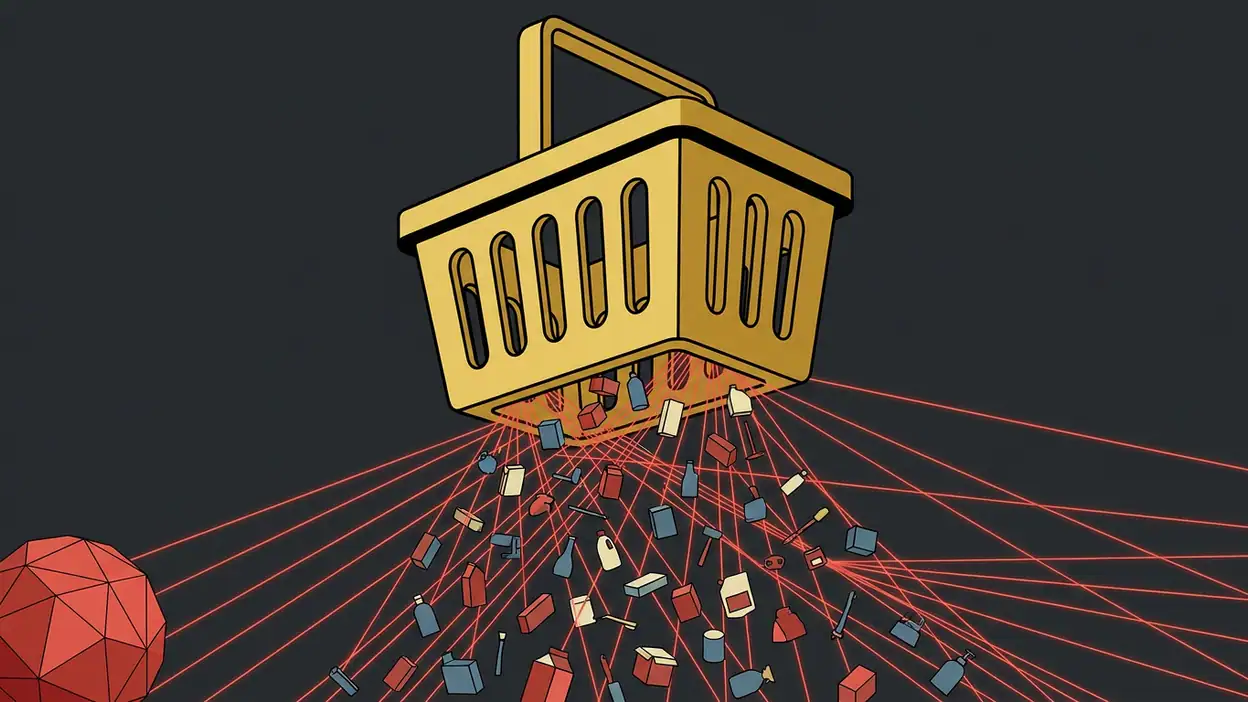
My central view is straightforward: Temu is powerful because it treats the phone not as a storefront but as a programmable shopping channel. It can buy attention, measure reactions, subsidize transactions, and adjust the path from curiosity to checkout at enormous scale. Users may receive astonishing deals along the way, but the company’s real advantage is the ability to influence what people browse, how long they stay, and what they consider worth buying.
The bargain is only the opening move
Open Temu and the first impression is a flood. Products arrive in dense grids, prices are displayed with theatrical confidence, and the app rarely lets a category feel finished. A small household tool leads to a storage accessory; a phone case leads to a cable, stand, or oddly specific gadget. The experience is less like entering a shop with a list and more like walking through a market where every stall is shouting a different number.
That abundance can be genuinely useful. I found items that are difficult to locate in ordinary stores, especially inexpensive accessories, craft supplies, small organizers, kitchen tools, and novelty products. Search usually gets me close to the intended object, while recommendations are good at surfacing adjacent items I had not considered. Temu understands that mobile shoppers often arrive without a firm plan. It builds the plan while they browse.
The trade-off is that the app makes restraint unusually difficult. Prices are so low that the question shifts from “Do I need this?” to “Why not?” That is a meaningful behavioral change. A low-cost item does not require the same deliberation as a major purchase, and Temu uses that reduced friction to increase the number of decisions a shopper makes in one session. The app does not need every product to be essential. It needs enough products to feel harmless.
Temu’s strategic achievement is turning low prices into a reason to keep looking. A conventional retailer wants a shopper to find the right product quickly. Temu also benefits when the shopper keeps exploring, adding small items, checking promotions, and returning later to see what has changed. The marketplace is therefore built around continuous discovery rather than simple product retrieval.
The company power behind the app
Temu is operated by PDD Holdings, the company associated with Pinduoduo in China. That background helps explain why the app feels different from a standard online department store. PDD’s broader model has long emphasized social shopping, value-sensitive consumers, merchant competition, and mechanisms that make buying feel participatory rather than purely transactional. Temu carries that logic into international markets, where it has paired a huge selection with unusually aggressive customer acquisition.
The company’s power does not come from one magical feature. It comes from coordinating several expensive capabilities at once. Temu can subsidize discounts, pay for advertising, recruit merchants, test interfaces, negotiate logistics, and tolerate inefficient early transactions while it builds scale. That patience is difficult for a small retailer to match. It is also difficult for established companies to imitate without damaging their own economics.
This is why the app’s pricing should be read as strategy, not merely generosity. Some products may be sold with very thin margins, and promotional offers can make the economics look even more extreme. The immediate transaction is only one part of the calculation. Acquiring a shopper, learning what that shopper clicks, increasing order frequency, and building supplier density can be worth more than maximizing profit on a single basket.
There is a second layer of power in the merchant side. Temu can present itself as a route to international demand for manufacturers and sellers that might otherwise struggle to build a recognizable consumer brand abroad. The platform handles much of the customer-facing machinery: listings, promotion, payment, traffic, and a large part of the purchasing experience. For sellers, that can be attractive. It also means the platform gains leverage over how products are priced, displayed, and discovered.
The company’s influence grows as more merchants depend on that machinery. A marketplace with many sellers can lower prices through competition, but it can also make suppliers interchangeable from the shopper’s perspective. That strengthens Temu’s position. The consumer sees a product and a price; the platform sees inventory, conversion data, seller performance, and opportunities to adjust the mix.
How Temu fits the larger ecosystem
Temu does not need to own every layer of commerce to exert influence over the shopping journey. It needs to control enough of the journey that users begin with its recommendations, compare prices inside its environment, and complete the purchase without leaving. The app’s ecosystem is therefore assembled from partnerships, data flows, logistics arrangements, advertising, payment systems, and mobile habits.
That makes Temu different from a traditional retailer in an important way. A retailer usually decides what to stock and presents a relatively curated range. Temu acts more like a market operator and a demand engine. It can test thousands of products, observe which images attract clicks, compare seller performance, and promote whatever combination of price and presentation produces the strongest response.
Amazon’s ecosystem is built around trust, fulfillment, subscriptions, and a broad account relationship that extends well beyond shopping. SHEIN is more tightly associated with fashion, rapid trend cycles, and a highly optimized apparel feed. AliExpress has long been known for international marketplace depth and direct-from-seller variety. Temu borrows pieces of all three approaches but puts its own emphasis on low-stakes browsing and mass-market novelty.
That positioning gives it room to expand across categories. The app does not ask users to identify as fashion shoppers, electronics enthusiasts, or home-improvement buyers. It asks them to be curious and price-conscious. That is a much larger audience. A person who would never install a specialist marketplace may still open Temu to look for a cheap cable, a gift, a storage box, or something amusing.
The ecosystem becomes stronger as those categories overlap. A shopper who enters for a practical purchase can be nudged toward impulse items. A shopper who arrives for entertainment can become a repeat customer. The app does not need a single dominant use case if it can make many small use cases coexist under one account.
Distribution is the real competitive weapon
Temu’s most important advantage may be its willingness to spend heavily on distribution. The app has appeared through prominent advertising, referral incentives, social campaigns, and promotions designed to make installation feel like the first step in a shared opportunity. This matters because marketplaces are difficult to build without traffic. Sellers need shoppers, shoppers need selection, and both sides need a reason to tolerate the early imperfections of a growing platform.
Temu attacks that problem with money and visibility. A new user may be offered a coupon package, a limited-time deal, or an invitation mechanism that turns existing users into acquisition channels. Those incentives can feel excessive, but excess is part of the point. The app is not quietly waiting to be discovered in an app store. It is trying to occupy cultural and commercial space at the same time.
Distribution also includes the ability to place Temu inside everyday conversations. People compare prices, share unusual finds, discuss delivery, and send product links to friends. Some of that sharing is prompted by the app, but the underlying material is naturally shareable because the products are cheap, strange, or unexpectedly useful. A bargain marketplace can spread through curiosity more easily than a conventional retailer can.
Once installed, the app has another distribution advantage: it can reach the user directly through notifications and promotional surfaces. That changes the relationship from occasional search to recurring contact. A physical store waits for a visit. A search engine waits for a query. A mobile marketplace can create the occasion itself.
This is where the economics of attention become visible. Temu can spend to acquire a user, then use personalized merchandising and reminders to generate many future shopping sessions. The cost of the first order matters, but so does the probability that the user will keep the app, open it during idle moments, and gradually treat it as a default place to check prices.
The small decisions that create a habit
Temu’s interface is not a game in the conventional sense, yet it borrows heavily from game design. There are countdowns, progress cues, reward-like promotions, rotating offers, and the feeling that a better deal may disappear if I pause. None of these elements is individually revolutionary. Together, they create a rhythm of checking, comparing, claiming, and returning.
The app is especially effective at shrinking the emotional distance between browsing and buying. A product page emphasizes the price, the apparent discount, ratings, images, and delivery information in a compact package. The user does not need to build a detailed justification for a low-cost purchase. The interface supplies enough reassurance to keep the decision moving.
That rhythm encourages what I would call basket drift. I may begin with one practical item, then add several inexpensive products because the total still appears modest. The basket becomes a record of impulses rather than a response to a defined need. Temu benefits from this drift because its catalog is designed to make the next item feel relevant, affordable, and slightly too interesting to ignore.
Notifications extend the loop beyond the app. A price change, shipment update, promotional event, or expiring offer can bring Temu back into view. Some alerts are useful, especially for tracking an order. Others are clearly designed to reopen the shopping session. The distinction matters because a marketplace that repeatedly interrupts the day is competing not only with other retailers but with every other app seeking attention.
There is a subtle psychological effect in the app’s constant movement. If the selection and promotions seem to change all the time, delaying a purchase can feel like missing an opportunity. That perception does not need to be perfectly accurate to influence behavior. It only needs to make the user feel that browsing now has a possible payoff.
What this means on a phone
Mobile commerce has a different texture from desktop shopping. A phone is personal, always nearby, and often used during fragmented moments: waiting in line, sitting on public transport, watching television, or taking a short break. Temu is well suited to those moments because it does not require a clear shopping mission. It can fill spare attention with an endless supply of low-cost decisions.
The small screen also favors visual speed. Temu’s product cards, discount labels, and recommendation rows are built for scanning rather than careful comparison. That makes the app efficient for browsing but less comfortable for reflective purchasing. I can move through dozens of products quickly, yet the speed itself makes it harder to remember why I wanted something or whether the listed saving is meaningful.
Search remains important, and Temu is at its best when I have a specific object in mind but do not care about the brand. The app can be a surprisingly effective tool for finding generic accessories and inexpensive household items. It is less convincing when quality, durability, authenticity, or precise specifications matter. In those cases, the low price may be the beginning of the evaluation rather than the end.
Delivery expectations also shape the phone experience. Temu has trained many users to accept a longer wait in exchange for lower prices. That is a notable shift in mobile shopping norms. Amazon made fast delivery feel central to online convenience; Temu asks whether enough consumers will trade speed for savings and variety. The answer, judging by the app’s momentum, is yes, at least for many categories.
The phone is therefore not just the place where Temu is used. It is part of the company’s operating model. The device supplies location, notifications, camera access for certain shopping functions, account continuity, and a near-permanent channel to the customer. The more often the app is opened, the more valuable that channel becomes.
How rivals are being forced to respond
Temu’s growth puts pressure on rivals in different ways. AliExpress has the closest structural comparison: a broad international marketplace with a huge range of inexpensive goods. Its challenge is that Temu presents a more tightly managed and promotion-heavy front end, making the catalog feel less like a collection of independent sellers and more like one coherent retail experience.
Amazon faces a different problem. Its advantages in fulfillment, trust, customer service, and branded selection remain substantial, but it is not naturally optimized for the kind of recreational bargain hunting Temu encourages. Amazon can match some prices and expand its low-cost offerings, yet doing so without weakening its premium convenience model is complicated.
SHEIN demonstrates another response: make the feed itself the destination. Its success in fashion shows how a shopping app can behave like entertainment, with rapid visual discovery and frequent reasons to return. Temu applies a similar logic across a much wider set of products. The competition is no longer only about inventory or logistics. It is about who can make browsing feel most rewarding.
Mercado Libre, in markets where it is strong, illustrates the value of local trust, payments, delivery infrastructure, and regional familiarity. That kind of ecosystem depth is difficult for a global entrant to reproduce quickly. Temu can compensate with price and novelty, but local platforms may remain stronger for urgent purchases, established brands, and services tied to domestic commerce.
The broader response will likely be a race toward lower prices, denser recommendation feeds, stronger seller tools, and more aggressive promotional design. That may benefit consumers in the short term. It may also make shopping apps increasingly similar in their pursuit of attention, with every platform trying to turn a practical task into a recurring entertainment habit.
Where users genuinely benefit
It would be unfair to discuss Temu only as a machine for extracting attention. The app can deliver real value, particularly for shoppers with limited budgets. A low price is not an abstract advantage when someone needs a replacement cable, school supplies, craft materials, kitchen equipment, or a small household fix. Temu’s range can make experimentation affordable.
The marketplace is also useful for discovering products that conventional retail does not prioritize. I have found niche accessories and oddly specific tools that would be expensive or inconvenient to source elsewhere. For hobbyists, organizers, decorators, and people who enjoy making things, that breadth can feel liberating. The app makes a large manufacturing ecosystem visible to ordinary shoppers.
Price transparency is imperfect, but the combination of reviews, customer images, product specifications, and delivery estimates gives users more information than a purely offline purchase would. Reading reviews is essential, especially because product quality can vary, but the app at least creates a record of other buyers’ experiences.
Temu also lowers the social and financial risk of trying something new. A person may be willing to test a craft tool or kitchen gadget at a few dollars when they would not pay a premium for a branded alternative. Some purchases will disappoint. Others will become useful precisely because the barrier to experimentation was low.
That is the positive side of the platform’s scale. It connects consumers to an enormous supply base and passes some of the resulting price pressure on to them. The experience can be messy, but the savings are not imaginary. For many users, Temu is attractive because it makes ordinary consumption stretch further.
Where users lose leverage
The same system that lowers prices can reduce a shopper’s negotiating power in less visible ways. Temu controls the interface through which products are ranked, promoted, and contextualized. Users can search, filter, and read reviews, but the platform still decides what receives attention. A product that is cheap and highly promoted may crowd out one that is more durable, ethical, or suitable.
Quality uncertainty is the most obvious weakness. Product photography can make inexpensive goods look more substantial than they are, and ratings do not always answer the questions that matter most. Materials, sizing, electrical safety, longevity, and compatibility require careful checking. The app’s speed encourages a quick purchase, while the consequences of a poor purchase may arrive later.
There are also environmental and social costs that a bargain interface tends to hide. Individual low-priced items can encourage overconsumption, while international shipping and high product turnover carry a footprint that is not reflected in the checkout total. The app makes each object feel small; the aggregate effect is not small.
Data and attention are part of the exchange as well. Like most large mobile marketplaces, Temu benefits from understanding what users search for, click, save, buy, and ignore. Personalization can improve discovery, but it also gives the platform more power to shape demand. The user may feel that they are freely exploring while the environment has been carefully arranged to produce certain kinds of behavior.
Promotional mechanics can weaken judgment by making urgency feel normal. A countdown, coupon threshold, or limited offer may be legitimate, but the cumulative effect is to keep the shopper in a state of unfinished evaluation. The user is not only deciding whether to buy. The user is deciding whether to keep watching for a better deal, a reward, or a reason to return.
The loss of leverage is therefore not limited to money. It includes time, attention, predictability, and the ability to distinguish genuine value from persuasive presentation. Temu gives users access to more products while making the platform itself more influential in deciding which products deserve consideration.
A platform built for scale, not intimacy
One reason Temu feels so different from a neighborhood shop is that it has little interest in intimacy. It does not need to know the shopper as a person in the traditional retail sense. It needs behavioral signals: what attracts a click, which price converts, how long a session lasts, and what recommendation leads to another purchase.
That makes the experience remarkably adaptable. The app can serve a bargain hunter, a parent, a hobbyist, a student, and a casual browser without becoming a specialist in any one identity. Its common language is price and possibility. The more categories it covers, the more situations it can enter.
Scale also changes what counts as a successful product. A conventional retailer may judge an item by its sales volume and margin. Temu can judge it by whether it earns clicks, increases basket size, improves retention, or helps a user discover a related category. The product is part of a larger behavioral experiment.
That perspective explains the app’s constant sense of motion. Temu is not a finished catalog waiting to be consulted. It is a live marketplace being tuned continuously. Prices, images, rankings, recommendations, and promotions can all function as levers. The shopper experiences a stream; the company sees a set of measurable responses.
For users, the practical lesson is to treat the app as a powerful search and discovery tool rather than a neutral window onto the market. Compare important purchases elsewhere. Read reviews critically. Check dimensions and materials. Disable notifications that do not provide real service. Most importantly, decide what you need before the feed decides for you.
The final verdict
Temu is impressive precisely because its ambition is larger than its catalog. The app combines low prices, supplier scale, paid distribution, recommendation systems, promotional psychology, and mobile convenience into one unusually effective retail machine. It can save money, reveal useful products, and make shopping feel easy. It can also turn spare minutes into spending sessions before the user has formed a clear intention.
Temu: Shop Like a Billionaire succeeds as a platform because it understands that the future of mobile commerce will be fought through habits, not just checkout pages. Its strongest feature is not a particular discount or interface trick. It is the coordination of every part of the experience around repeated discovery.
My recommendation is conditional but positive. Temu is worth installing if you want inexpensive variety and are prepared to inspect listings carefully, tolerate slower delivery, and resist the pressure to keep browsing. It is less suitable as an unquestioned default for products where reliability, safety, brand accountability, or long-term quality matter more than price.
The bigger conclusion is harder to ignore. Temu shows how a shopping app can become an ecosystem power center without owning every product or every delivery vehicle. Control the attention, shape the recommendations, subsidize the first purchase, and the marketplace begins to control demand itself. Users get bargains from that arrangement, but they should remember what the bargain buys the platform: not just a sale, but a place in the daily operating system of shopping.