AppCompare
WEBTOON Turns Phone Updates Into a Better Reading Routine
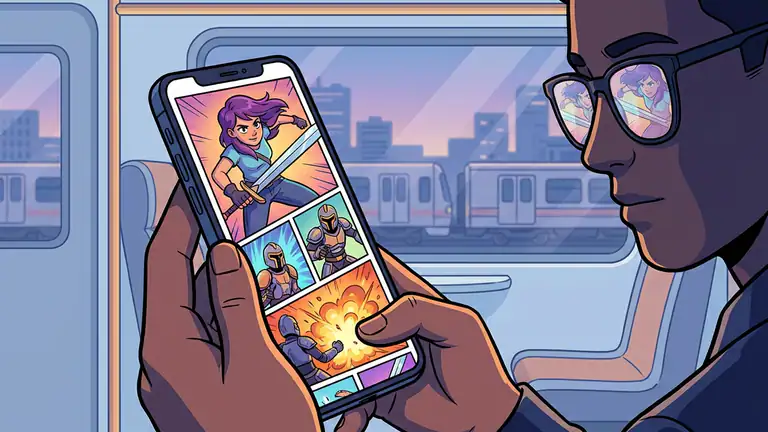
Operating-system updates rarely change the story on the screen. They change the little decisions around it: whether a notification interrupts, whether a phone remembers where you stopped, whether a commute becomes ten spare minutes of reading. That is the useful lens for WEBTOON: Manga, Comics, Manhwa. Its core format has not needed a reinvention; its value is how naturally a vertical comic fits the habits Android and iOS have spent years encouraging. The app makes a phone feel less like a small book and more like a pocket-sized reading routine, with real gains in convenience and some familiar limits in continuity, attention, and display comfort.
This is not a review of a single dramatic operating-system feature. WEBTOON’s experience shifts more quietly as phones improve their notification controls, background behavior, accessibility settings, and larger-screen options. Those changes matter because reading is often interrupted. A reader might open an episode while waiting for a train, lock the screen to answer a message, then return later. The best mobile app is not the one that pretends interruptions do not exist; it is the one that makes returning feel easy. WEBTOON generally understands that job.

When phone updates meet the vertical episode
WEBTOON’s defining choice is still its long, vertical canvas. Instead of turning pages or pinching around a fixed comic layout, readers move down through panels with a thumb. The approach makes sense on a phone: the next beat arrives with a simple gesture, and the space between panels can control timing in a way a conventional page cannot. A pause becomes a reveal; a long drop can make a quiet moment feel longer. That reading grammar is the app’s real platform advantage, not a flashy operating-system trick.
Android and iOS have both moved toward more controlled, personal notification systems. Readers can decide which alerts deserve attention, limit interruptions, and keep reading apps from competing with every other service on the device. WEBTOON’s updates and episode reminders can be useful if they point to a series a reader actively follows. They are less welcome when a once-curious subscription turns into another stream of prompts. The operating system now gives users more ways to manage that pressure, but the app still has to earn the right to send each alert.
Newer phones also make switching between apps less disruptive. A quick glance at a message, a transit check, or a calendar reminder no longer has to mean abandoning an episode. In practice, that helps WEBTOON more than a headline feature would. The app is built for short sessions, so its success depends on how little effort it takes to resume one. A vertical story can be read in a few minutes, then left until the next pause in the day.
There is an important caveat: precise behavior can vary by app version, device maker, and OS release. Android brands often add their own battery controls and notification layers; iOS applies a more uniform system but still changes settings and presentation over time. WEBTOON’s broad usefulness survives those differences, but no reader should assume that every alert or background preference behaves identically across phones.
What the app gains from the current phone
The clearest gain is that WEBTOON matches the shape and motion of a modern handset. Tall screens leave room for more of a comic panel at once, while responsive scrolling keeps the reader in the story instead of asking them to manage a miniature page. On a bright, sharp display, color work and facial expressions remain easy to read. On a compact device, the format still works, although dense art can demand more zooming and patience.
The app also benefits from how phones manage personal libraries and recurring habits. A reader can follow ongoing series, browse recommendations, check what is available, and return to a saved reading position without treating the app like a formal reading session. That convenience is especially valuable for serialized comics. A story may be followed across weeks, and the act of keeping up can become as routine as checking a podcast queue or a news feed.
That routine is not just a matter of convenience. WEBTOON connects readers with a broad mix of comics, including work associated with manga, manhwa, and webcomic traditions, while its serial structure gives creators room to build audiences one installment at a time. The app’s cultural relevance comes from that ongoing relationship: readers discuss characters between updates, recommend a series to friends, and discover titles that may never have been on a bookstore shelf nearby. The phone is both delivery device and meeting place.
Its strongest product decision is therefore making the next episode feel close without making the reading itself feel complicated. The app does not require a dedicated e-reader, a paid comic-store account, or a quiet hour. That low entry cost can turn a passing recommendation into a sustained reading habit. It also makes the first impression unusually quick: open a title, start an episode, and the basic interaction is clear.
What readers notice first
New users notice the abundance before the mechanics. There are many titles, styles, and genres to explore, and the home experience is designed to put a possible next read within reach. This is both an invitation and a challenge. A large catalog reduces the chance that a reader will run out of options, but it can make discovery feel like browsing a crowded shelf with no obvious end. Recommendations help, yet they are not a substitute for clear personal curation.
Once an episode begins, the vertical scroll is the first thing that feels distinct. It asks less of the hand than repeated page turns and works naturally in one-handed use, especially on a commute or while waiting in line. The format also suits dramatic pacing. A creator can leave a gap before a reveal, stretch an establishing shot down the screen, or let a sequence of panels accelerate. Readers who are used to print comics may need a few episodes to adjust, but the rhythm becomes intuitive quickly.
Then the business model becomes visible. WEBTOON has free reading options, while access to some episodes or early installments can involve a paid currency or other restrictions. The exact choices depend on the title and current offer, so readers should check the terms shown in the app rather than assume every series follows the same schedule. The important editorial point is that the free entry helps people sample widely, while paywalls can interrupt the momentum of a story once they are invested.
That friction is easy to understand and still worth naming. A reader who reaches a locked episode at a cliffhanger may feel the app has turned a story into a checkout decision. Others will appreciate the option to support a creator or read ahead. The model works best when the app makes the distinction clear and lets readers decide at their own pace. It works less well when a user is trying to remember which episodes are available, which require payment, and when a free release arrives.
The day-to-day shift: reading in fragments
WEBTOON is at its best in the gaps that would otherwise disappear: a short break between tasks, a quiet ride, or the few minutes before bed. The vertical format makes it easy to begin without setting aside a whole block of time. A story can advance one scene at a time, and the phone’s familiar scroll gesture keeps the physical effort low. That is a meaningful advantage over formats that assume a reader is seated with both hands and a full page in view.
It also brings the weaknesses of fragmented attention into the reading experience. Messages, calls, and app switching can break a scene’s emotional timing. A comic relies on visual continuity, and returning halfway through a sequence is not always as effortless as resuming a video at a timestamp. The app can preserve a place, but it cannot recreate the mood that an interruption has scattered. Focus modes and notification controls help; they do not turn a busy phone into a quiet reading room.
Reading comfort is another everyday variable. Long episodes can mean a lot of thumb movement, and a reader with a small screen or limited dexterity may find endless scrolling tiring. Larger text and display settings can help where the art and app presentation allow, but comics are not ordinary prose: enlarging an image may mean losing the panel composition or having to pan around. WEBTOON’s format is elegant when the artist designs for the canvas and less forgiving when detail is packed tightly.
Dark surroundings make the phone’s display controls relevant, but a dark interface is not the same as a comic drawn for dark mode. Artwork retains its intended color and contrast, and a bright panel can still light up a dim room. Readers can lower brightness or use the OS’s comfort settings, though color filters may alter the appearance of the art. These are small choices, but they shape whether an episode is pleasant before sleep or just another reason to keep the screen glowing.
Data and connectivity matter too. A catalog app is most comfortable when episodes load reliably, and a mobile connection can be inconsistent on trains, in basements, or while traveling. Readers who plan to catch up away from dependable service should check what offline or download options are available for their account and the titles they follow. Those features and limits can change, so it is unwise to treat the app as a complete replacement for a locally stored book collection.
New strengths in the wider phone ecosystem
Phones now sit inside an ecosystem of earbuds, watches, tablets, cars, and cloud-backed accounts. WEBTOON does not need to dominate every surface to benefit from that reality. A phone is the natural place to read a scrolling comic, while a tablet can give the artwork more breathing room. A larger screen can make detailed backgrounds easier to appreciate, although the tall format may leave unused space on some displays. The best device depends on the title and the reader’s preference, rather than on a single universal setup.
System-level accessibility also affects who can make the app part of a routine. Screen magnification, color adjustments, spoken interaction, and other device tools can make a phone easier to use, but visual comics remain primarily visual media. Their accessibility depends heavily on the original art, the app’s controls, and whether a reader can navigate the interface comfortably. OS accessibility features can reduce barriers; they cannot supply descriptions of panels that were never provided.
Likewise, family settings and purchase controls matter because WEBTOON’s broad range of stories does not mean every title suits every reader. Platform controls can help manage spending and screen time, while the app’s own content information helps readers decide what to open. Neither layer should be treated as perfect. Parents and younger users still benefit from checking the specific series, not relying on the app category alone.
These ecosystem connections clarify what WEBTOON is and is not. It is a dedicated comics destination, not a general media hub that happens to contain comics. Compared with ESPN, which is organized around live scores, video, and fast-moving updates, WEBTOON asks for a slower kind of attention even when a session is short. Compared with Flightradar24, whose map invites quick checks of changing real-world activity, a comic rewards following a sequence. The contrast sharpens the point: the app uses mobile convenience to make sustained stories available in small portions.
Compatibility friction and familiar limits
The first compatibility issue is not an obscure technical failure; it is the variety of phones. Screen dimensions, refresh behavior, battery management, and manufacturer software can all affect how a long episode feels. An older device may scroll less smoothly or take longer to load artwork. Aggressive background restrictions may delay notifications. Those problems do not make WEBTOON unusable, but they can make a reader blame the app for behavior that comes from the phone’s settings or hardware.
Account continuity is another point to handle carefully. Readers who move between a phone and tablet want subscriptions, reading progress, and purchases to follow them. Cloud-linked accounts make that practical, but users should confirm that they are signed into the same account and understand which items are tied to it. Moving between Android and iOS can introduce extra uncertainty around store billing and purchase records. A platform switch is not always as simple as reinstalling an app and expecting every transaction to transfer unchanged.
There is also a tension between a polished vertical reader and the open nature of the phone. A reader can be pulled out of an episode by a notification, a battery warning, a low-data prompt, or a system update reminder. These are not failures unique to WEBTOON. They are the cost of reading inside a device designed to do everything at once. The app can make a comic easy to enter; the operating system decides how noisy the doorway becomes.
For readers who care about collecting, the mobile-first format may feel limiting. Episodes are convenient to access, but that is not the same experience as owning a printed volume, browsing a shelf, or building a personal archive. Licensing and catalog availability can also vary by region and title. WEBTOON is strongest as a living service for following stories, not as a promise that every comic will remain available forever in exactly the same form.
How rivals adapt to the same habits
Other mobile apps show how different kinds of content respond to OS change. Android Auto is built around safer access to essential information while driving, so it reduces interaction rather than encouraging a reader to linger. ESPN competes for brief checks and live attention; Flightradar24 turns a map into a useful glance. Ludo King® treats the phone as a shared game board, where turns and social play set the rhythm. None of these is a direct comics substitute, and comparing them as if they were would miss the point.
Instead, they reveal the constraint WEBTOON handles unusually well: a phone session must make sense at several different lengths. One episode can fill a break; a few episodes can occupy a ride; a long binge can stretch into the evening. The app’s scroll-based storytelling makes those sessions feel related without requiring a reader to commit to a full volume. That flexibility is a design strength, but it also encourages the familiar mobile loop of one more episode.
Rivals in reading and entertainment will keep adapting to larger displays, system-level recommendations, subscription fatigue, and stricter user control over notifications. WEBTOON’s advantage is not that it escapes those pressures. It has a format with a strong identity and a catalog built around serial discovery. Its challenge is to keep the reading path clear while balancing free access, creator support, and paid advancement.
What this says about mobile’s direction
The broader direction is less about adding more buttons and more about making services fit around a person’s attention. Modern phone systems give users tighter control over interruptions and more ways to move between tasks. For WEBTOON, that means the app’s future value will be measured not simply by how much content it can surface, but by whether readers can choose when to hear about it, pick up a story without friction, and understand what access costs.
That is a healthy test. Mobile products once treated engagement as a simple measure of success: more alerts, more sessions, more time in the app. A comics service has a better reason to care about return visits, because serialized stories genuinely depend on readers coming back. But the difference between a welcome reminder and a nag is the reader’s control. Good platform behavior should make it easy to follow a series without making every new episode feel like an obligation.
WEBTOON also shows how a native mobile format can influence the art itself. Vertical pacing is not merely a page squeezed onto a phone; it changes how a creator can stage a scene and how a reader experiences suspense. As displays grow taller and tablets become more common, the format will face a design question: how to preserve that purposeful downward rhythm across different aspect ratios. A larger screen should reveal more art, not flatten the beats that made the format work.
There is a commercial question alongside the design one. Readers are increasingly careful about subscriptions, micropayments, and recurring digital costs. WEBTOON can keep its broad audience only if the value of paid access is legible and the free path remains satisfying enough to invite new readers. Creators also need a model that rewards work without placing every emotional turning point behind a confusing barrier. That balance is harder than a new interface feature, but it will shape the app’s reputation more deeply.
Who benefits most, and what to watch
This shift suits readers who like serialized stories, discover titles through recommendations, and often have a few spare minutes rather than a long uninterrupted reading window. It is particularly convenient for people already comfortable reading on a phone and for anyone who wants a broad comic catalog without carrying a book. Fans who enjoy talking about ongoing stories may get extra value from the cadence of regular episodes and the app’s role as a shared discovery space.
It is a less natural fit for readers who strongly prefer page layouts, collect physical editions, dislike in-app purchases, or want to read for hours without scrolling. People with small screens, unreliable mobile service, or a low tolerance for notifications should also set expectations before making WEBTOON their main comics library. The app is flexible, but it cannot make every phone comfortable or every payment model feel right.
The next things worth watching are practical rather than flashy: clearer control over reminders, dependable reading progress across devices, transparent episode access, and better ways to make long-form browsing manageable. Accessibility deserves similar attention, especially navigation and support for readers who need more than the default visual presentation. Improvements here would deepen the app’s value without tampering with the simple gesture that defines it.
WEBTOON: Manga, Comics, Manhwa remains compelling because its central idea is already well matched to the phone: a story unfolds with the same easy downward motion people use everywhere else on a screen. Android and iOS updates make that habit easier to manage, but they do not erase the costs of interruptions, scrolling fatigue, connectivity, or paid gates. For readers who want a living stream of comics in the small spaces of an ordinary day, WEBTOON is a smart, enjoyable fit. Its best future is not a louder app; it is a more considerate one that lets the story keep the attention it has earned.