AppCompare
Basketball Stars: Multiplayer Is Fast, but Can It Recover When Matches Go Wrong?
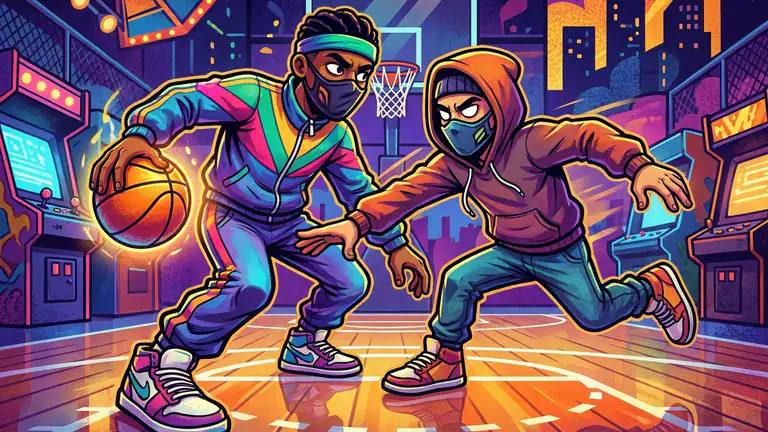
Basketball Stars is at its best when a match begins before you have time to overthink it: read the opponent, fake a move, steal the ball, and turn a few seconds of possession into a shot. That quick rhythm is also the game’s reliability test. A polished court is not enough if a setup snag, accidental tap, or weak connection can turn a short contest into a confusing loss. My verdict is that Basketball Stars: Multiplayer has a compelling, compact play loop, but its resilience is harder to judge than its highlight moments. The game is most convincing when everything is moving; players who need clear recovery rules should treat several edge cases as unverified rather than assume the game will save them.
The reliability promise
The premise is wonderfully direct. This is a head-to-head basketball game built around short matches, readable gestures, and a small set of high-stakes decisions. You are not managing a full team or building a season-long strategy. You are trying to get past one opponent, protect the ball, and score before the exchange turns against you. That narrow focus gives each possession an immediate pulse: a feint can invite a reach, a steal can reverse the play, and a shot leaves just enough time for doubt.

That design makes reliability part of the competition rather than background housekeeping. In a slower game, a pause or brief network wobble might be an inconvenience. Here, a delay can erase the opening you saw, make a defensive action arrive late, or leave you unsure whether the result was decided by your timing or the connection. A fair multiplayer game needs more than responsive-looking animations. It needs to communicate what happened when timing and network conditions stop cooperating.
The happy path is easy to understand: enter a match, trade moves, and find another opponent when you are ready. I found the quick-match structure more inviting than a simulation that asks for a long commitment before the first meaningful action. But that convenience creates a sharper expectation. If a game promises short rounds, it should also make a failed round easy to diagnose and a return to play easy to manage. That is where the review has to separate what the design makes apparent from what cannot be confidently confirmed in every failure scenario.
First setup failure points
Getting into a mobile game is rarely just one decision. A player may need to accept introductory prompts, learn the controls, wait for content to load, and reach a usable match state. Basketball Stars keeps its central idea simple, which helps: the game is easier to approach than a title that asks you to learn several currencies, menus, and team systems before you can compete. The first meaningful task is still clear enough to grasp: understand the action on the court.
Yet “simple to play” does not guarantee “simple to recover.” A first session can be interrupted by a call, a forced app switch, a permission prompt, or a download that takes longer than expected. If that happens before the player understands whether the game has finished loading or whether a match has already begun, the interface needs to explain the state plainly. I would not assume that leaving during an introductory step preserves every choice or resumes at the exact point of interruption. That behavior may depend on the version, device, and the stage of setup.
The useful distinction is between learning the game and completing its onboarding. The former is light: the basketball action is easy to read, and a new player can quickly infer why possession matters. The latter can still be vulnerable to interruptions because it involves screens and transitions whose persistence is not as visible as the court itself. If you are setting up on a commute or with an unreliable connection, give the initial session a little breathing room rather than treating every loading pause as proof that the game has stalled.
There is also a small but important expectation gap in a multiplayer title. A player may think they have entered a practice or preview state when they are actually moving toward a live contest. The more clearly the game signals the difference between preparation and a scored match, the less likely an early mistake is to feel costly. The core controls are approachable, but players who dislike learning by trial and error should take a moment to identify the current screen before tapping through it.
Mistakes and reversibility
Basketball Stars makes mistakes feel immediate because the game is built around reading another person in real time. A mistimed move is not an abstract deduction from a score meter; it can hand over possession. That pressure is part of the appeal. The trouble is that not every mistake is the same. A bad feint is a sporting error, while an accidental menu tap, a wrong selection, or a purchase made in haste is an interface problem. A robust game gives the player a fair chance to tell one from the other and, where possible, undo the latter.
On the court, reversibility is naturally limited. You cannot expect every committed action to come with an undo button without draining the match of tension. The fair standard is instead clear feedback: the player should be able to see whether an action registered, whether the opponent intercepted it, and why control changed. The game’s fast exchanges make that information especially valuable. When animations are lively and both players are acting at once, a brief visual ambiguity can make a legitimate loss look like input failure.
Outside the match, caution is more appropriate. I cannot verify from the game’s visible play loop alone how every account choice, purchase, reward claim, or progression decision can be reversed. Players should read confirmation screens carefully and avoid treating a tap as harmless just because the game is casual in tone. Where a decision involves spending or a persistent account change, pause long enough to confirm what the button actually does. That advice is not an accusation that the game mishandles purchases; it is a sensible limit on what can be inferred without testing each transaction path.
The same restraint applies to match outcomes. If a round ends after a strange pause, do not assume that a particular action caused the result until the game presents a clear summary. A lost possession is part of basketball. A result screen that appears after a connection hiccup is a different matter. The difference matters for trust: players can accept losing a contest more readily than they can accept not knowing whether the contest was conducted fairly.
Interruption and return
Short matches are a natural fit for mobile play, but short does not mean interruption-proof. A call can arrive during a defensive exchange. A player can lock the screen by accident, switch apps to answer a message, or have the operating system reclaim memory. The best return behavior would restore the active match when possible, or clearly state that it has ended and explain the consequence. Anything between those outcomes—a frozen court, a menu with no context, or a silent reset—would turn a minor interruption into a trust problem.
I would not promise that Basketball Stars always resumes an active multiplayer match exactly where it left off. Mobile operating systems can close background apps, and live matches depend on the state being maintained beyond the local screen. Without a confirmed account of how the current version handles each interruption, the careful conclusion is that recovery may vary with device, operating-system behavior, and connection timing. Players should regard a backgrounded match as vulnerable, especially if they are already seeing delays.
That uncertainty does not make the game a poor fit for phones. Its match length and straightforward objective suit small pockets of free time. It does mean that the right play habit is to start a match when you can give it a few uninterrupted minutes, rather than queueing while expecting to dip in and out. A game can be casual in tone and still demand a clean window once the whistle has effectively blown.
Returning after a completed match is a separate question from resuming an unfinished one. The game’s quick-round structure encourages another attempt, which is a strong replay hook: a loss can feel like a lesson in timing rather than a reason to stop. But replay value depends on a clear end state. If a player returns and cannot tell whether the previous round counted, whether a reward was collected, or whether the next match is ready, the invitation to play again loses its force. The most useful resilience feature here is not necessarily a dramatic recovery screen; it is a dependable, legible transition back to the court.
Connectivity pressure
Multiplayer basketball depends on timing, and timing is precisely what weak connectivity puts under pressure. A little delay can change how a feint reads, whether a defensive action lands, and how much confidence a player has in a shot. That makes network quality part of the play experience, not merely a technical footnote. When the connection is good, the exchange can feel crisp and personal. When it is not, the same quick pace can magnify every pause.
It would be tempting to label any awkward exchange a server problem, but that is not a responsible review. A missed action could reflect input timing, a player’s own connection, the opponent’s connection, or a momentary performance issue. Unless the game clearly identifies the cause, the player may not have enough evidence to distinguish those possibilities. The practical test is whether the game communicates a connection problem before, during, or after the disruption, and whether it tells you what happened to the match.
Players on unstable mobile data should expect more uncertainty than those on steady Wi-Fi. That is a general consequence of live competition, not proof of a defect unique to this title. Still, a well-designed multiplayer game should avoid making the player guess whether a delayed action was accepted. A visible status message, a clear reconnection state, or an explained match result can preserve confidence even when the network itself cannot be fixed.
Do not keep tapping repeatedly when the game appears to hesitate. Rapid input during a lag spike can make it harder to understand which action registered, and repeated taps may compound the confusion rather than help. Give the game a moment to respond, check whether the match is still active, and use the on-screen state as your guide. If the connection remains unreliable, stepping out and trying again later is less frustrating than treating every contested moment as a test of reflexes.
Unclear states
For a resilience-focused review, the most revealing moments are often not crashes but ambiguity. Is the game waiting for an opponent, loading a court, reconnecting, or frozen? Has a shot been resolved, or is its animation still playing? Did a match end normally, or did the connection fail before the result was recorded? A player can tolerate a brief wait if the game explains what it is waiting for. Silence turns a routine delay into a question about whether to wait, back out, or risk losing progress.
Basketball Stars’ visual language is built to keep the court lively, which supports the fun but can make state changes feel abrupt if feedback is not explicit. A quick animation can make an exchange exciting; it can also conceal the exact instant control changes hands. Clear text and distinct transition cues matter because players should not have to reconstruct a whole possession from motion alone, especially after the screen has stuttered.
There is a useful contrast with games that have slower, turn-based pacing, such as UNO!™. In a turn-based match, a pause is often easier to interpret because the game can identify whose turn it is. Basketball Stars has less room to hide a delay: the action is the point. That makes clarity under pressure a core part of fairness. It should be possible to tell when the game is waiting on a network event rather than asking the player to guess whether a gesture failed.
My advice is to read the state before acting. If the court is still animating, avoid stacking inputs. If the game presents a result, take that as the current recorded outcome rather than assuming a later correction will appear. If the interface offers a clear retry or reconnection option, use that rather than force-closing immediately. These are cautious operating habits, not claims that every unclear state has a guaranteed recovery path.
Recovery guidance
When a mobile game behaves oddly, the temptation is to do everything at once: tap repeatedly, close the app, change networks, and reopen it. That makes it harder to tell what helped and can risk turning a temporary delay into a lost session. A better approach is sequential. First wait briefly to see whether the match resolves. Then check whether the game has displayed a connection or result message. If the screen remains unresponsive, leave only when you are prepared for the possibility that an active match will not resume.
Before starting another contest, confirm that the app has returned to a normal menu or match-ready state. If the issue repeats, check that the connection is stable and that the game is updated, then restart the app only when there is no clear in-game recovery option. These are standard steps, not a promise that they will restore a particular match. If a purchase or account-related issue is involved, preserve any relevant confirmation details and use the game’s official support route rather than assuming a quick reinstall will fix an account record.
The distinction between local troubleshooting and official support matters. A restart can help with a screen that has stopped responding, but it cannot establish whether a disputed online result was correctly recorded. Likewise, a connection change may improve later matches without undoing the outcome of the one that already ended. Players should avoid spending additional currency or repeating a transaction simply because a reward or confirmation is not immediately visible; first establish whether the original action went through.
Good recovery advice is honest about what it cannot restore. A game can guide players through the next step without pretending that every interrupted match is recoverable. Basketball Stars would be easier to trust if every failure state made its status and consequence unmistakable. Until a player sees that information, patience and careful checking are safer than an assumption that progress has been saved.
Where evidence is missing
Some questions cannot be answered responsibly by watching ordinary matches alone. Does an active contest resume after the app is backgrounded for a short time? What happens if the connection drops just before a result is finalized? Are rewards delivered once connectivity returns, or does the player need to take another step? Does a match that ends during a loading transition count as a loss, a cancellation, or neither? These are specific behaviors, and they can change between versions or depend on the exact timing of an interruption.
I do not have enough verified evidence to claim that Basketball Stars consistently restores interrupted matches, protects every reward through a disconnect, or offers a universal remedy for disputed outcomes. The responsible review is not to turn that gap into a confident complaint. It is to identify it as a gap and tell readers what follows from it: if a match result has high personal stakes, do not assume the game has a recovery guarantee until its current in-game guidance or support documentation confirms one.
There is also a difference between an isolated hiccup and a pattern. One delayed exchange cannot establish that matchmaking is unreliable, just as one smooth session cannot prove that reconnection always works. A serious resilience assessment needs repeatable tests across devices, network conditions, and app states. Without that evidence, the strongest grounded judgment is about design pressure: the game’s fast, live format makes clear feedback and reliable transitions especially important, while the details of its edge-case recovery remain uncertain.
This is not a reason to discount the game’s appeal. It is a reason to be precise about the basis of the review. The core loop is plainly designed for quick competition, and its strengths are visible in play. Its less visible promise—what it does when play is interrupted—needs more direct confirmation before I would call it robust.
Who needs more certainty
Casual players who can start a match on a stable connection and are comfortable with the occasional imperfect mobile session will likely find the game’s format easy to enjoy. A loss is quick to process, and the next contest is close at hand. That low commitment gives the game a useful resilience of its own: a bad round does not consume an evening, and the short loop makes another attempt feel natural.
Players who compete seriously, play over unreliable mobile data, or care deeply about every reward and result should ask more questions before relying on it. If your enjoyment depends on knowing that an interrupted match will resume or that a disconnect cannot affect the outcome, the available evidence here does not justify that confidence. Likewise, parents managing spending, players with limited data, and anyone using an older device should take time with account, purchase, and connectivity settings rather than assuming every situation will be self-explanatory.
The contrast with Brainly: AI Homework Helper is useful only in one narrow respect: users of a utility app often expect a task to remain available after a pause, while a live sports match is inherently time-sensitive. Basketball Stars cannot make interruption harmless without changing the nature of its competition. But it can make the consequences easier to understand. That is the standard cautious players should use: not whether a live match can pause forever, but whether the game tells you clearly what a disruption means.
Resilience verdict
Basketball Stars earns its appeal through speed, direct competition, and a satisfying little rhythm of deception and response. It does not need a sprawling ruleset to make a possession feel tense. The game’s best moments arrive when a read pays off: the opponent bites on a feint, the ball changes hands, and a clean shot settles the exchange. That brisk loop gives it genuine replay value and makes a quick session feel like a proper contest rather than a menu tour.
Its resilience case is less complete. The format puts unusual weight on timing, connection feedback, and clear match states, yet recovery after app switching, network loss, or a disputed finish cannot be treated as guaranteed without stronger, version-specific evidence. That uncertainty is not the same as proof of failure. It is a real limit on what I can recommend with confidence, and a reason for cautious players to protect their expectations.
My bottom line: Basketball Stars is easy to recommend as a lively, pick-up-and-play multiplayer game for people with a reasonably stable connection and a few uninterrupted minutes. It is harder to recommend to anyone who needs confirmed recovery behavior before investing time, progress, or money. The court is quick to return to after an ordinary loss; whether every interrupted match gets the same clean ending is the question the game still needs to answer more plainly.