 Article about NFL
Why the NFL App Keeps Football Fandom in Sync
AppCompare
Football fandom rarely lives in one place. It begins with a fixture list, moves through injury reports and group chats, peaks during a live drive, and lingers in arguments long after the final whistle. The NFL app understands that rhythm better than most sports apps, but its real value is not simply the amount of information it gathers. It is the way the app gives scattered fan behavior a common timetable. My central finding is that the product works best as a community clock: it tells people what matters now, gives them material to discuss, and makes the weekly season feel like a shared ritual rather than a sequence of isolated games.
That distinction matters because the app is not a social network in the conventional sense. You do not open it primarily to meet strangers, publish a personal feed, or build a creator identity. Instead, the community forms around events that everyone already recognizes: kickoff, a questionable flag, a quarterback injury, a dramatic comeback, a playoff bracket, or the release of a new schedule. The app supplies the official frame, while fans provide the emotion, interpretation, and noise around it.

NFL
NFL Enterprises LLC · 2.4 · Free · Android, iOS
A community built around the clock
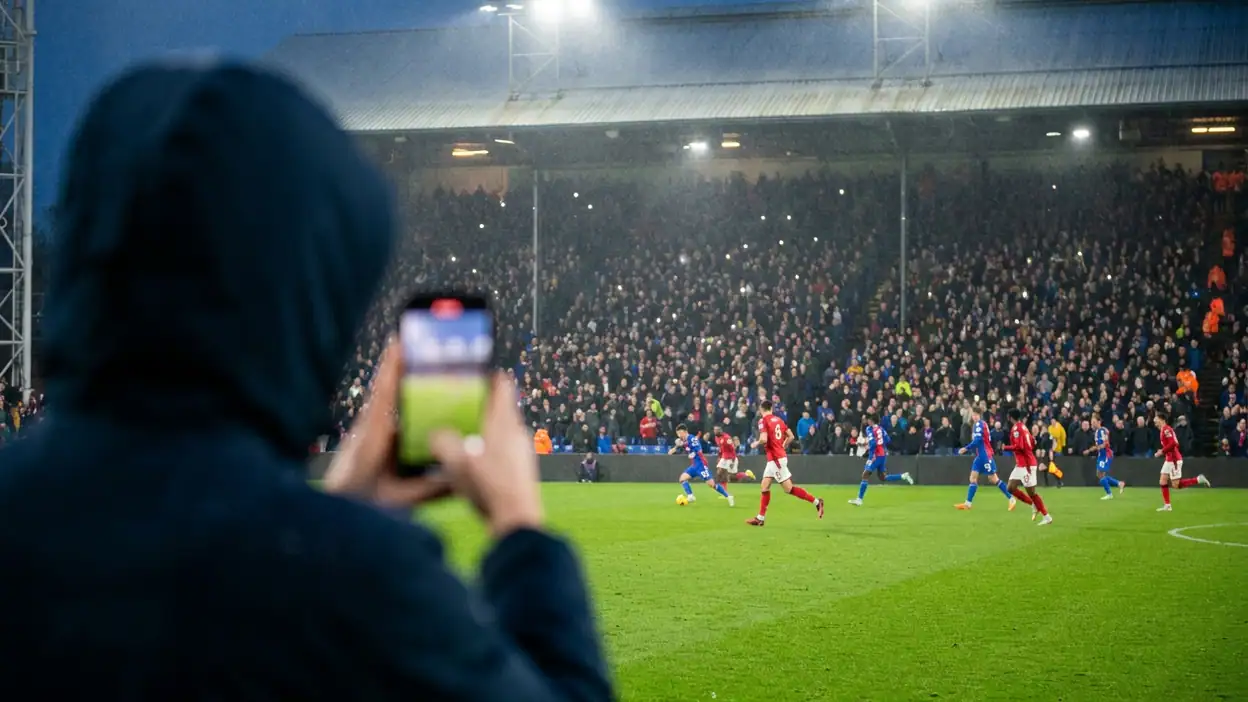
The strongest community hook is timing. On an ordinary Tuesday, the app can feel like a reference tool. On game day, it becomes a live companion, and that change in tempo is important. Scores, schedules, standings, news, video, and team information are not equally valuable at every hour. Their usefulness rises and falls with the football calendar, and the app is designed around those peaks.
I found that the product becomes most compelling when I already have a reason to return. A favorite team, a fantasy matchup, a playoff race, or a nationally televised game gives the app an immediate purpose. It does not need to manufacture urgency because the sport supplies it. That is a strength, but also a limitation: outside the season or away from meaningful games, the community energy can thin out quickly.
Compared with Pinterest or WEBTOON, where the feed itself can create an endless browsing habit, the NFL app depends more heavily on shared real-world events. Its community is less about discovering content and more about arriving at the same moment. That makes the experience narrower, but often more intense.
The participation model
Participation begins with a small commitment. You choose teams, follow a schedule, check a score, watch a clip, or read a news item. None of those actions demands much effort, yet each one places you inside the sport's larger conversation. The app does not ask every user to become a commentator. It allows quiet participation through repeated checking, while giving more vocal fans enough material to debate.
This layered model is one of the product's smartest qualities. A casual fan may open the app for a final score. A committed supporter may track every drive, compare standings, read roster news, and use the app as a factual counterweight during an argument. Both users are participating in the same ecosystem, even though their behavior looks very different.
The official status of the service also shapes that participation. Fans can treat it as a baseline for schedules, scores, and league news, then move elsewhere for opinion and conversation. That division is healthy. The app does not have to imitate every feature of a social platform to remain relevant; it needs to be dependable enough that outside discussion keeps referring back to it.
How newcomers enter
Newcomers enter through context rather than community introductions. A person who knows only a team name can begin with the schedule. Someone following a particular player can start with news or statistics. A viewer who has just watched a close game can check the result, replay key moments, or look at the standings. The app's structure gives each type of curiosity a doorway.
That is more welcoming than a community that expects users to understand its slang before they can participate. Football still has a steep learning curve, especially around formations, penalties, roster movement, and playoff scenarios, but the app can make the sport legible through repetition. Seeing the same teams, positions, and weekly patterns gradually builds fluency.
The weakness is that official presentation can sometimes assume more knowledge than a true beginner has. Scores and standings tell you what happened, but not always why it mattered. A newcomer may need explanatory coverage, a friend, or another source to understand the strategic and cultural background behind the numbers. The app opens the door, but it does not always walk the user through the room.
Recurring rituals and fan habits
The community's rituals are easy to recognize because they repeat every week. Fans check injury news before a game, scan inactive players, follow the opening drive, refresh during a tense final possession, and revisit the standings afterward. Those actions are almost mundane, yet they create the product's stickiness. The app becomes part of the preparation and the postgame autopsy.
There is also a seasonal ritual to the experience. Schedule release creates anticipation. Training camp creates speculation. The regular season creates weekly allegiance. The trade deadline and playoff race sharpen attention. The postseason compresses the entire community into a smaller, louder circle. Each phase changes what users look for, which keeps the same basic tools from feeling completely static.
My favorite part of this rhythm is the way a simple notification or score update can act as a social trigger. It tells a fan that something has happened and gives them a reason to message someone else. The app does not need to host that conversation to influence it. In this sense, its network effect often occurs outside the product.
What players, creators, and fans contribute
The app's community contribution is not creator-led in the same way as WEBTOON. There is no comparable expectation that ordinary users will build serialized work for an audience. Instead, contribution happens through attention and interpretation. Fans identify the moments worth discussing, clip or share them through other channels, explain decisions to friends, and turn official updates into personal narratives.
Sports media personalities, analysts, team reporters, fantasy players, and fan communities add another layer. They transform raw information into predictions, arguments, jokes, and strategy. The app benefits from that surrounding labor even when it does not directly host all of it. A score becomes a talking point; a roster update becomes a theory; a schedule becomes a promise or a complaint.
This is where the product's ecosystem differs from a game such as UNO! or Tiles Hop. Those products can generate direct competition inside the app through matches, rankings, and repeat play. The NFL app generates competition mainly through allegiance, prediction, fantasy decisions, and claims about expertise. The contest is often social and interpretive rather than mechanical.
That distinction makes the app feel culturally significant, but it also means the quality of the surrounding community depends on external spaces. The official product can provide accurate facts and timely access. It cannot fully control the quality of the arguments that grow from them.
Social friction: rivalry, certainty, and noise
Football communities are powered by disagreement. Rivalries create loyalty, and loyalty creates return visits. A close game can make the app feel like a shared public square, even if the actual conversation happens in group chats, forums, or social feeds. The emotional charge is not a side effect; it is one of the reasons the ecosystem remains active.
But the same energy produces friction. Fans often treat interpretation as fact, especially around officiating, player value, coaching decisions, and injuries. A clean score page can sit beside a chaotic argument about what the score means. The app's official tone may feel calm, while the wider conversation becomes personal and repetitive.
There is also a difference between productive competition and identity-based hostility. Debating a fourth-down decision can be entertaining. Harassing a player, opposing fan, or journalist is not. The app's role is complicated because it benefits from passionate attention while having limited influence over conversations that happen beyond its own interface.
For users, the practical lesson is simple: treat the app as a reliable starting point, not as a guarantee that every surrounding discussion will be informed or civil. The more emotionally important the game, the more useful that distinction becomes.
Moderation and safety: what remains unclear
Any community report has to separate visible behavior from unverified assumptions. The app clearly supports a high-attention sports ecosystem, but its full moderation architecture is not something a normal user can confidently assess from the outside. It is therefore difficult to make strong claims about how every abusive comment, misleading post, or hostile interaction is handled across the wider NFL digital environment.
That uncertainty matters because official sports products often connect to content, sharing tools, notifications, and external platforms rather than containing every conversation themselves. Safety may depend on the specific feature, account system, device settings, or destination where a user continues the discussion. Parents, younger fans, and users who want a quieter experience should be cautious about assuming that official branding means every adjacent interaction is equally controlled.
The app can still contribute to a safer ecosystem through clear information, responsible presentation, and restraint around sensational coverage. Accurate injury reporting, careful language, and transparent corrections reduce confusion. Yet those qualities are not the same as comprehensive community moderation. The boundary should remain explicit: what the app publishes is easier to evaluate than what fans do with it elsewhere.
Where network value appears
The network value appears most clearly in coordination. Everyone knows when games happen, where to find the score, and which events are likely to dominate conversation. That shared reference point lowers the effort required to participate. A fan does not need to explain the entire context before sending a message about a touchdown or a late interception.
The value also appears in cumulative knowledge. Returning users learn team patterns, recognize recurring matchups, and build personal routines. The app becomes a memory aid for a season that can otherwise blur into hundreds of plays and headlines. That continuity is valuable for fans who follow multiple teams, fantasy leagues, or the postseason across several weeks.
There is a useful contrast with Pinterest, where network value grows through recommendation and visual discovery. The NFL app's network value grows through synchronization. Pinterest says, in effect, that someone else may have found something you want. The NFL app says that something is happening now, and many people are watching it with you. One is built around discovery; the other is built around simultaneity.
The product also acts as a bridge between levels of fandom. A serious supporter can use detailed information without forcing a casual viewer to do the same. That shared surface is harder to create than it looks. Too much complexity intimidates newcomers; too little detail frustrates committed fans. The app is most successful when it lets both groups remain connected to the same event.
Can the ecosystem last?
The ecosystem has a durable foundation because the sport itself supplies recurring content, established teams, recognizable personalities, and a calendar that resets every year. Unlike a short-lived social trend, football does not need to invent a new reason for fans to return. The next game, next injury report, and next playoff calculation are already built into the structure.
Still, durability should not be confused with automatic loyalty. Fans can get their scores from many places, follow analysis through podcasts, watch highlights on video platforms, and argue in group chats. The app must earn its place by being fast, accurate, easy to navigate, and useful at the moments when attention is most valuable. If updates lag, notifications become excessive, or coverage feels too promotional, users have little reason to stay inside the official product.
Its long-term strength will depend on balance. The app needs enough depth to reward committed fans without becoming a wall of statistics for everyone else. It needs enough personality to feel connected to the sport without sacrificing trust. It also needs to recognize that sharing is part of the ecosystem, not a failure to keep users inside the app. A fan who checks a score and immediately sends it to a friend is still participating in the product's network.
There is no obvious need for the app to become a full social platform. That could introduce more moderation problems without solving the central challenge. Its better path is to remain the dependable source around which other communities organize. A strong official hub can be more valuable than a crowded imitation of every rival service.
Community verdict
After spending time with the app, I see its community strength less in direct interaction than in shared timing. The product gives fans a dependable set of facts and a regular sequence of reasons to care. It turns the season into a series of appointments, and those appointments create the social energy that spreads through conversations elsewhere.
Its limitations are equally clear. Beginners may need more explanation, the quiet periods of the calendar can feel less alive, and the app cannot guarantee the quality or safety of every discussion connected to its content. It also does not replace the richer personalities and sharper debates found in independent fan spaces. That is not necessarily a flaw, but it defines the product's role.
NFL works best as the community's shared scoreboard, calendar, and point of reference. It is not where every fan contribution happens, and it is not designed to be the final destination for every argument. Its network value appears when people use its information to prepare, react, compare, and reconnect. For football fans who want one reliable place to anchor those rituals, the app remains genuinely useful. Its community is not built from endless posting; it is built from millions of people showing up for the same moments, week after week.
That is a quieter kind of ecosystem, but a durable one. The app succeeds when it respects the difference between supplying the event and owning the conversation. By keeping the official facts close at hand, it gives the wider football community something solid to gather around, even when the opinions surrounding those facts become loud, divided, and gloriously unreasonable.