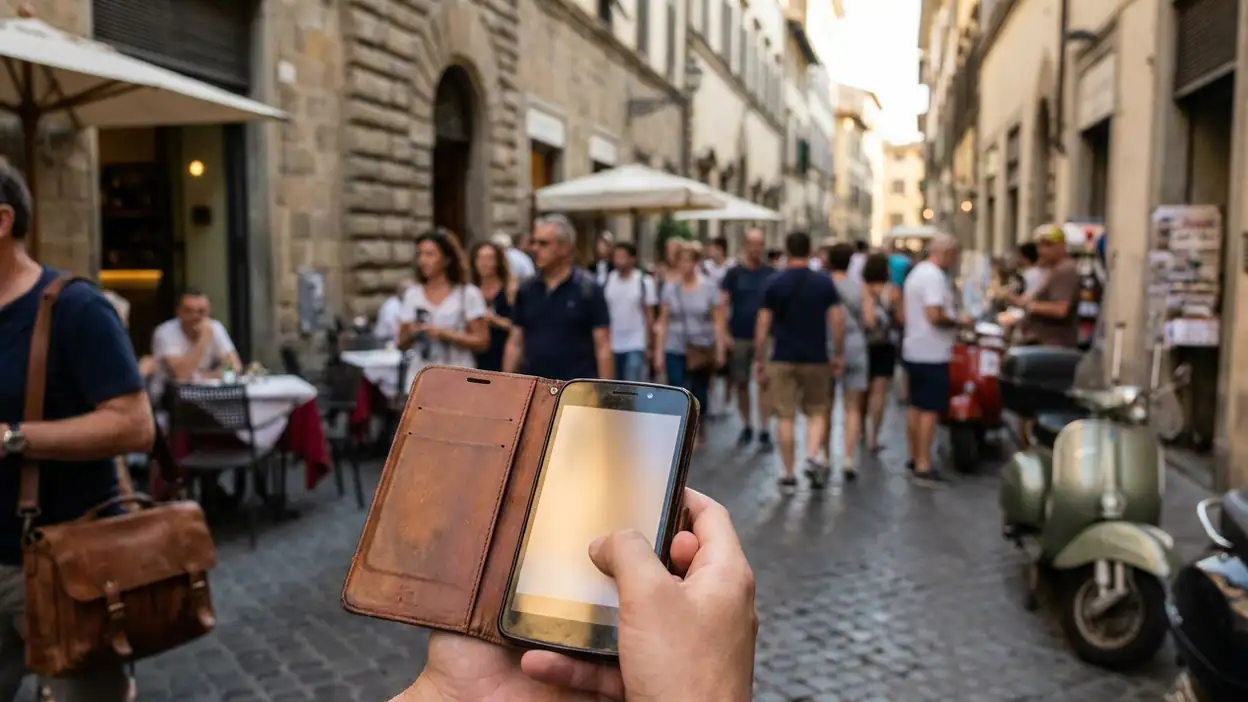
 Article about Google Maps Go
Why Google Maps Go Sets a New Standard for Mobile Navigation
AppCompare
Most people do not open a map app because they want to study geography. They open one with a bag in one hand, a dying battery, a train to catch, or a street name they cannot pronounce. That pressure makes Google Maps Go a useful lens for the entire travel and local-search category. It is not the fullest version of Google Maps, and it was never meant to be. Its value is that it strips navigation back to the decisions people actually need to make, then exposes the new standard: a useful map must be fast, legible, context-aware, and dependable before it is feature-rich.
I tested it with the expectations of a normal traveler rather than a cartographer. I searched for businesses, checked routes, moved between map and list views, and imagined the awkward moments that define real use: weak reception, an older phone, a crowded screen, or a sudden change of plan. The result is a product that feels modest beside the full Google Maps app, but that modesty is revealing. It shows where mobile maps have become mature, where they still waste our time, and why the next generation of travel apps will compete less on the number of pins they display than on the quality of the judgment they provide.

Google Maps Go
Google LLC · 4.1 · Free · Android, iOS
The category is moving from maps to decisions
The old promise of a mapping app was simple: put the world on a screen and help me get from A to B. That promise has been fulfilled so thoroughly that it no longer describes the real competition. Users now expect a map to interpret a place, not merely locate it. They want opening hours, transport options, traffic conditions, reviews, photos, accessible entrances, estimated arrival times, and a sense of whether a destination is worth the detour.
That expansion has made travel-local apps more useful and more demanding at the same time. A service such as Booking.com: Hotels & Travel is judged by how quickly it narrows accommodation choices. Airbnb is judged by whether a listing feels trustworthy before money changes hands. trivago is useful because it turns a fragmented hotel market into a comparison exercise. Google Earth satisfies a different appetite, letting users explore places visually rather than reach them efficiently. Instabridge: WiFi Hotspot Map addresses a practical travel anxiety that traditional maps often ignore: staying connected after arrival.
These products point in the same direction. The category is no longer built around a single destination database. It is built around reducing uncertainty. A good travel app tells me where something is, but a better one helps me understand the cost, time, reliability, and effort involved in choosing it.
The baseline has become unforgiving
At minimum, users now expect accurate search, clear directions, multiple travel modes, live or recently updated local information, and a sensible way to recover when plans change. They expect the app to remember enough context to avoid repetitive work, but not so much that privacy becomes mysterious. They also expect performance on ordinary hardware. A map that looks impressive on a new flagship phone but hesitates on a budget handset is not meeting the category baseline; it is merely demonstrating what the category could do under ideal conditions.
This is where Google Maps Go becomes interesting. Its lighter construction is not just a technical compromise. It is an argument about priorities. The app reduces the load placed on the phone and, in doing so, makes speed part of the product rather than a side effect of expensive hardware. Search results appear with less ceremony, the interface feels less crowded, and the basic act of orienting yourself remains central.
That restraint matters because maps punish delay. A half-second pause while walking is irritating; a longer pause at a junction can send someone in the wrong direction. In a hotel room, a feature-heavy app may feel luxurious. On a rainy sidewalk, the best interface is often the one that gets out of the way.
Its strongest signal is disciplined usefulness
The clearest message from Google Maps Go is that speed is a form of trust. When a map opens promptly and responds to a search without making the user wait through layers of visual polish, it feels dependable. That feeling is especially important on inexpensive phones, older devices, or connections that are less than perfect. The app does not turn every interaction into a showcase. It treats the map as infrastructure.
That approach also changes how the user reads the screen. The full Google Maps experience can be rich to the point of distraction, with recommendations, business details, review content, transport information, saved places, and layers competing for attention. Google Maps Go keeps the central question closer to the surface: where am I, what is nearby, and how do I get there?
It would be unfair to call this simplicity universally superior. The lighter app gives up depth, and frequent users may miss some of the full service's richer planning tools. But that trade-off is honest. It does not pretend that every traveler needs a comprehensive local operating system. For many journeys, a quick search and a reliable route are enough.
The conventions it follows
Google Maps Go still follows the familiar grammar of modern mapping. There is a map canvas, a search field, location awareness, place discovery, and route planning. Users do not need to relearn the category before they can use it. That continuity is important: travel apps benefit from shared conventions because people often open them under pressure and cannot spare time for experimentation.
It also follows the category's shift toward local discovery. A search for a restaurant, station, pharmacy, or hotel is not treated as a simple coordinate lookup. The surrounding information helps turn a location into a possible action. This is the same broad move seen in accommodation apps, where a room is presented through neighborhood, price, availability, and guest evidence rather than as an isolated listing.
The app also inherits the expectation that a map should serve both residents and visitors. A local user may want a faster route to work; a traveler may need to understand an unfamiliar district. The interface has to remain neutral enough for both. Google Maps Go succeeds when it keeps those use cases close to the same basic interaction instead of forcing users through separate travel and local modes.
The convention it challenges
What it challenges is the assumption that more information automatically creates a better travel tool. The industry has spent years adding layers: curated lists, sponsored placements, social proof, photos, live alerts, loyalty systems, booking links, and personalized recommendations. Much of that material can help, but each addition competes with the immediate task of finding one's bearings.
Google Maps Go makes a quieter claim: the map should not have to become a lifestyle platform to remain valuable. Its lighter presentation suggests that mobile utility can be premium even when it is not visually elaborate. That is a meaningful challenge to the idea that an app must constantly offer something new to justify its place on a phone.
There is a limit to this argument. A stripped-down experience can also hide information that matters. Travelers may need detailed opening hours, entrance photos, accessibility notes, or a dependable offline plan. Simplicity is only useful when the omitted material is genuinely secondary. The category's next task is not to remove detail indiscriminately, but to reveal the right detail at the right moment.
What related products reveal
Looking at neighboring apps makes the shift clearer. Booking.com: Hotels & Travel and trivago are built around comparison. Their users are not simply asking where to sleep; they are weighing price, location, ratings, cancellation rules, and availability. The map is part of that decision, but not the whole decision. This raises the standard for local apps: context must help users compare realistic options, not merely browse an attractive collection of pins.
Airbnb pushes the category toward atmosphere and trust. A listing has to communicate what staying there might feel like, while reviews and host information reduce the risk of a poor choice. That is a different kind of mapping problem. The question is no longer only whether a place exists at a certain address, but whether the address matches the experience being promised.
Google Earth shows another direction: exploration without an immediate task. Its appeal comes from scale, imagery, and the pleasure of seeing the world from above. It reminds us that maps can be cultural objects as well as utilities. Yet Google Maps Go makes the opposite case. Most everyday sessions are not voyages of discovery. They are short interventions in a day already in progress.
Instabridge: WiFi Hotspot Map exposes a particularly important gap. Connectivity is part of navigation, especially for international travelers and people managing limited data. If a travel app knows where I am but cannot help me remain connected, its understanding of the journey is incomplete. The future category will increasingly connect place information with practical conditions such as network access, transport disruption, weather, cost, and battery life.
The emerging standard is contextual restraint
The next standard will not be a bare map, nor will it be an endless dashboard. It will be a system that understands the user's immediate situation and presents only the information that changes the decision. A person walking toward a station needs a different interface from someone comparing hotels for next month. A tourist in a new city needs stronger orientation cues than a resident searching for a familiar grocery store.
Google Maps Go points toward this standard through its emphasis on a quick, low-friction core. The full Google Maps app remains better suited to deep planning, saved places, detailed business research, and more complex journeys. The existence of a lighter version acknowledges that context matters. Not every session deserves the same weight.
This is also where artificial intelligence will be tested more seriously than by novelty features. A useful assistant should summarize the relevant options, explain a route in plain language, flag uncertainty, and avoid pretending that incomplete information is precise. If a restaurant's hours may be outdated or a path is difficult for wheelchair users, the app should make that uncertainty visible. More automation will not help if it merely produces confident noise.
Where the category still lags
Travel-local apps remain weaker at communicating reliability. A pin can be accurate while the information attached to it is stale. A route can be mathematically correct while being uncomfortable, inaccessible, poorly lit, or impossible during a local event. A hotel can have a strong rating while its neighborhood context is misunderstood by a first-time visitor.
Offline behavior is another persistent weakness. Downloadable maps help, but offline use is often treated as a backup rather than a primary design condition. Travelers need to know what will continue working without a connection, when data was last refreshed, and which features will disappear. An app that quietly loses its most important functions at the moment of need creates more anxiety than a plainly limited offline mode.
Privacy also remains unresolved. Location history can make maps remarkably convenient, but convenience should not require users to accept vague explanations about how their movements are stored and used. The stronger standard will be meaningful control presented in language ordinary people can understand, not a maze of settings that technically provides choice while discouraging it in practice.
Accessibility deserves equal attention. Larger text, voice guidance, screen-reader support, wheelchair-aware routing, and clear visual contrast are not specialist extras. They are evidence that the app understands the physical variety of travel. A route that works for a confident pedestrian with full battery and perfect eyesight is only one version of a successful route.
What this means for users
For users, the consequence is encouraging but slightly demanding. The best travel app will not necessarily be the one with the most places, the most reviews, or the most polished imagery. It will be the one that reduces the number of judgments the user must make while preserving the important ones.
Google Maps Go is particularly convincing for people who value responsiveness over depth, use modest hardware, or want a map that does not turn every errand into a research project. It is less satisfying for travelers who plan elaborate itineraries, depend on rich place histories, or need every advanced feature in one application. That distinction is not a flaw in itself; it is a reminder that the category is fragmenting by situation rather than by a simple ranking of good and bad apps.
Users should also become more skeptical of apparent certainty. A blue route line is not a guarantee of comfort. A high rating is not a guarantee of fit. A hotel price is not the final cost until taxes and conditions are clear. Apps can make decisions faster, but they cannot remove the need for judgment. The best ones make that judgment easier without hiding the trade-offs.
The category outlook
Mobile maps are heading toward a quieter kind of intelligence. The winning products will combine broad databases with local freshness, lightweight performance with rich context, and personalization with transparent boundaries. They will know when to recommend, when to summarize, and when to leave the screen alone.
That is why Google Maps Go matters beyond its feature list. It represents a correction to an industry that often confuses capability with usefulness. Its lighter approach does not solve every problem, and it cannot replace the full Google Maps experience for demanding planning. What it does provide is a clear benchmark for the basics: open quickly, search cleanly, orient the user, and stay useful on the devices and connections people actually have.
The future of travel-local apps will be decided in those ordinary moments rather than in spectacular demonstrations. A map earns its place when it helps someone find the right entrance, catch the right bus, choose a sensible neighborhood, or get home without wasting attention. Google Maps Go understands that principle. Its real achievement is not being the most complete map on a phone; it is showing that, in a crowded category, restraint can be a more advanced form of service.